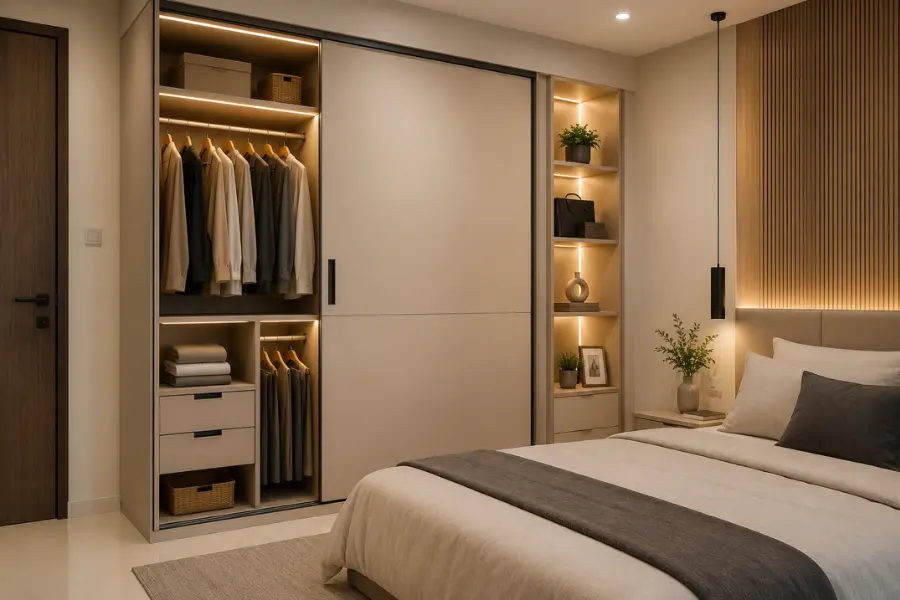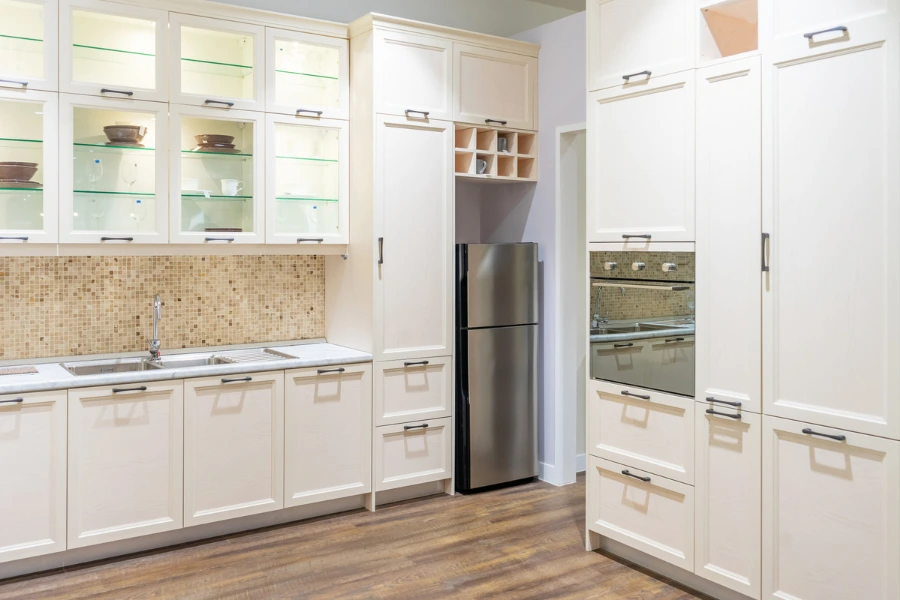
For Indian homes, BWP plywood and HDHMR are widely considered the Best Kitchen Cabinet Materials in India due to their moisture resistance, durability, and suitability for modular kitchen designs.
If you have ever managed an active Indian household, you already know the kitchen is effectively a heavy-duty workspace. Between the spluttering hot oil, the stubborn turmeric stains, and the frequent deep cleaning, the surfaces take a severe beating daily. This is exactly why choosing the right cabinet core materials for your modular setup is one of the most important decisions you will make during a renovation. You can always swap out the colour of your front doors later, but if the inner structural box warps or catches termites, the entire system fails.
When clients begin planning their layouts, they almost always ask about the external finish first: acrylic, laminate, or glass. But that’s not what guarantees longevity; the real difference comes from choosing the right modular kitchen materials for the internal structure. To find the best material for cupboard construction, you need to look past the shiny surface and see what’s inside those raw boards. Here’s a breakdown of what it takes to build a kitchen that will last for decades, especially designed to handle our specific weather and heavy cooking.
What Is the Best Material for Kitchen Cabinets?
The best material for kitchen cabinets depends on where the cabinet is installed and how frequently it is used. For wet areas, BWP (Boiling Water Proof) plywood is considered the most reliable option due to its superior moisture resistance and durability. For modern cabinet shutters, HDHMR is increasingly popular because of its smooth finish, strength, and resistance to moisture and termites. Choosing the right kitchen cabinet material ensures long-term performance, structural stability, and minimal maintenance.
Why Your Choice of Kitchen Cabinet Materials Matters
A common mistake homeowners make is assuming that a modular kitchen is a one-size-fits-all product. The reality is quite different. The core framework, industry professionals call this the carcass, dictates how well your kitchen will survive daily use. If you select weak carcass materials, the hinges will eventually loosen, the doors will sag off their tracks, and water seepage around your sink area will cause the wood to permanently swell and rot.
When comparing kitchen cabinet board options, you should judge them on moisture resistance, screw-holding strength, and termite protection. against three non-negotiable performance factors to optimise your investment:
-
Water and Moisture Resistance: Indian cooking involves heavy water usage, and our annual monsoons bring intense humidity. Your structural boards must withstand constant exposure to dampness without expanding.
-
Termite and Borer Proofing: Ground-floor homes or areas with high ambient dampness are highly prone to pest attacks. The core board must be chemically treated during manufacturing.
-
Screw Holding Capacity: Heavy doors and metal channels for pull-out drawers require strong, stable hinges. If the internal board is too soft, the screws will slip out over time due to constant pulling.
Understanding these factors makes it easier to choose the right modular kitchen materials for each cabinet zone. You don't necessarily need the most expensive board for every single box, but you absolutely need the right board for the right zone.
Also Read: 5 Smart Red and White Modular Kitchen Designs for Modern Homes
Understanding the Different Types of Cupboard Materials
Before looking at specific brands or grades, we need to separate the anatomy of the woodwork.For this guide, we are focusing on cabinet core materials used in the carcass and shutter base, because that is where the real durability comes from.
-
The Carcass: This is the internal box structure. It holds the shelves, the steel drawers, and the massive weight of the granite or quartz countertop. You never actually see this part once the doors are closed, but it carries the structural load.
-
The Shutter: These are the front-facing doors attached to the carcass.
-
The Finish: This is the decorative skin applied to the shutter (like laminates or PU paint) to make the space look appealing.
For this guide, we are strictly focusing on the core boards that form the shutters' carcass and base, because that is where the true strength of your kitchen lies.
Quick Comparison of Kitchen Cabinet Materials
|
Material |
Water Resistance |
Durability |
Best For |
|
BWP Plywood |
Excellent |
Excellent |
Sink & Base Cabinets |
|
BWR Plywood |
Very Good |
Excellent |
Dry Areas |
|
HDHMR |
Very Good |
Very Good |
Modern Shutters |
|
WPC |
Excellent |
Good |
High Moisture Zones |
|
MDF |
Low |
Moderate |
Decorative Units |
|
Particle Board |
Low |
Low |
Budget Furniture |
|
Stainless Steel |
Excellent |
Excellent |
Premium Kitchens |
This table improves AI Overview and featured snippet opportunities.
Which Kitchen Cabinet Material Should You Choose?
Choose BWP plywood for sink cabinets, heavy-use base units, and areas exposed to moisture. Choose HDHMR for premium shutters, routed profiles, and modern modular kitchen fronts. Use WPC in plumbing-heavy or damp zones where waterproofing is critical. Reserve MDF only for dry decorative sections, and consider stainless steel if you want maximum hygiene and durability.
Top Kitchen Cabinet Materials for Modern Indian Homes
Now that we know the criteria, let's look at the actual boards available in the market. There is a lot of misinformation out there. Here is an honest, professional breakdown of the Top Kitchen Cabinet Materials in India you should consider for your upcoming renovation.
BWP and BWR Plywood: The Trusted Cupboard Material
For decades, plywood has been the default recommendation for Indian interiors. Plywood is manufactured by glueing together multiple thin layers of wood veneers under intense pressure. However, not all plywood is the same. For heavy-duty use, you should only look at two specific grades:
-
BWP (Boiling Water Proof): Also known as Marine Grade or IS 710 plywood. This is the absolute best cupboard material for wet zones. It can withstand prolonged exposure to water, making it the only choice you should consider for the base cabinets directly under your sink or adjacent to the dishwasher.
-
BWR (Boiling Water Resistant): This grade is slightly less water-resistant than BWP but still holds up exceptionally well against humidity and indoor moisture. It serves as an excellent choice for the rest of your dry base cabinets and overhead units.
The cross-grained structure of plywood gives it an incredibly high screw-holding capacity. When evaluating kitchen cabinet materials, remember that opening and closing a heavy drawer full of steel utensils 10 times a day requires a tough core. Plywood ensures the channels stay firmly in place. While it demands a higher budget than engineered woods, the long-term return on investment is undeniable.
Read More: Top 10 Modern Kitchen Furniture Designs & Ideas for Homes
HDHMR: The Latest Material for Kitchen Cabinet
If there is one product that has completely disrupted the modular interior industry in recent years, it is High-Density High Moisture Resistance board. HDHMR is essentially an upgraded, highly compressed version of standard fiberboard. It is manufactured by combining forest wood waste and fibre with special water-resistant resins, then pressing them together at extremely high temperatures.
As the latest material for kitchen cabinet construction, HDHMR solves several common manufacturing problems. First, it has zero core gaps. Unlike plywood, which can sometimes have hollow spaces hidden between its layers, HDHMR is a solid, completely uniform board. This means you get a perfectly smooth surface, making it the ideal base for high-gloss acrylics or matte PU paint finishes. Second, it is highly resistant to water and naturally termite-proof due to the resins used during its pressing.
Many modern designers now prefer using BWP plywood for the carcass (to maximise screw holding) and HDHMR for the shutters (to achieve a flawless, undulated visual finish). It routes beautifully, meaning if you want profile handles or classical grooved designs on your doors, HDHMR will not chip or splinter.
BWP Plywood vs HDHMR: Which Is Better?
Both BWP plywood and HDHMR are excellent choices for modular kitchens. BWP plywood offers superior screw-holding strength and water resistance, making it ideal for cabinet carcasses and sink areas. HDHMR provides a smoother surface and better finish quality, making it a preferred option for cabinet shutters and designer kitchen fronts. Many premium modular kitchens combine both materials to achieve maximum durability and aesthetics.
MDF and Particle Board: Where Do They Fit?
Medium-density fiberboard (MDF) and Particle Board are widely used by large-scale commercial furniture retailers because they are inexpensive, lightweight, and easy to mass-produce. However, when selecting kitchen cabinet materials for an Indian home, extreme caution is required.
Particle board is essentially sawdust glued together, and standard MDF is a softer fiberboard. Both of these materials act like sponges when exposed to standing water. If a pipe leaks or water seeps into the edge banding, these boards will swell up to double their original size and permanently crumble.
We strongly advise against using them for base cabinets. If you are working with a very tight budget, you can use high-grade MDF for overhead wall units in dry pantry areas, but keep them far away from the sink and stove.
WPC (Wood Plastic Composite): The Waterproof Hybrid
If you are looking at different types of cupboard materials and want something that completely eliminates the fear of water damage, Wood Plastic Composite (WPC) is an outstanding hybrid option. As the name suggests, it is manufactured by blending wood fibres with thermoplastics.
Because it contains zero pure wood in its raw, untreated form, WPC is 100% waterproof and naturally immune to termite attacks. This makes it an incredibly safe choice for base cabinets that sit directly on the floor, especially in ground-floor homes that experience severe dampness. While standard hollow PVC boards struggle to hold heavy hinges, WPC is solid and provides a much better screw-holding capacity. It is slightly more expensive than commercial plywood, but for areas directly under the sink or near plumbing lines, this cupboard material offers unmatched peace of mind.
Stainless Steel: The Indestructible Option
For a long time, stainless steel was strictly reserved for commercial restaurant kitchens. However, it is rapidly gaining popularity in Indian residential homes, especially among homeowners who prioritise absolute hygiene and zero maintenance.
When evaluating ultra-durable kitchen cabinet materials, 304-grade stainless steel stands in a league of its own. It does not swell, it cannot be eaten by pests, and it will not absorb oil or heavy spice stains. You can literally wash the inside of your cabinets with a wet cloth without a second thought. Modern manufacturing has also evolved; you are no longer restricted to the cold, industrial silver look. Today, stainless steel carcasses can be seamlessly fitted with elegant acrylic or laminate shutters on the outside. If budget is not a constraint and you want a structural framework that will easily outlive the house itself, steel is one of the most bulletproof options available.
Also Read: Top 10 Latest Modular Kitchen Designs in Gurgaon 2026
Common Mistakes to Avoid When Choosing Kitchen Cabinet Materials
Many homeowners make costly mistakes when selecting kitchen cabinet materials. Some of the most common mistakes include:
- Choosing materials based only on price.
- Using MDF near sinks and plumbing areas.
- Ignoring moisture resistance ratings.
- Selecting poor-quality hardware.
- Overlooking edge-banding quality.
- Choosing aesthetics over durability.
A well-informed material selection can significantly increase the lifespan of your modular kitchen.
How ALMAC Selects the Right Cabinet Core Materials for Modular Kitchens
Knowing which boards to buy is only half the battle. The execution is what separates a local carpenter's rough job from a factory-finished modular setup. At ALMAC, we source only the highest-grade kitchen cabinet materials because we deeply understand the regional climate and usage habits of homes across Delhi NCR, Gurgaon, and Dwarka.
We source only high-grade modular kitchen materials that suit the moisture, heat, and daily wear typical in Gurgaon and Delhi NCR homes Moisture will eventually find its way in. We utilise advanced edge-banding machinery that seals every single exposed side of the board with waterproof synthetic glue and PVC tape. This creates a completely protected, sealed environment for the core material.
Furthermore, we do not believe in blind recommendations. We assess your specific cooking style, kitchen ventilation, and budget for layout. If you handle heavy cooking, we will engineer the carcass with structural-grade plywood and pair it with HDHMR shutters for maximum durability and style. Our hardware integration is precise, ensuring the screws bite deeply into the chosen kitchen cabinet materials and preventing sagging doors and misaligned drawers even after years of rough use.
Why Material Quality Matters in Modular Kitchens
The performance of a modular kitchen depends heavily on the quality of its core materials. Premium boards such as BWP plywood and HDHMR provide better load-bearing capacity, moisture resistance, and structural integrity compared to low-cost alternatives. Investing in quality materials helps reduce maintenance costs and ensures that your kitchen remains functional and visually appealing for many years.
Final Thoughts on Selecting Your Kitchen Cabinet Materials
Designing your home should be an exciting milestone, not a stressful gamble.Getting your kitchen cabinet materials right from day one from water damage, pests, and daily wear and tear. Remember, the external finish makes it look good, but the internal core makes it last.
Prioritise BWP plywood for your wet areas, leverage HDHMR for seamless, modern shutters, and avoid particleboard entirely. Getting your Best Kitchen Cabinet Materials in India right from day one will save you thousands of rupees in replacement repairs down the line. If you are still evaluating options and unsure about the best material for your cupboard setup in your specific space, we are here to help. Reach out to the design team at ALMAC to physically test the strength and finish of these materials for yourself. Let’s build a kitchen that handles your daily life effortlessly.
Frequently Asked Questions
Q1: What material is used for a kitchen cabinet?
Kitchen cabinets are constructed with a sturdy core material, typically BWP plywood or HDHMR, and then covered with a decorative layer, like laminate or acrylic.
Q2: What is the best material for kitchen cabinets?
The best core material for base cabinets is BWP (Boiling Water Proof) plywood, because it resists moisture. The best material for strong, smooth front shutters is HDHMR.
Q3: Is MDF better than PVC for kitchen cabinets?
Neither is ideal for base cabinets, as PVC lacks the strength to hold heavy screws and hinges, while MDF absorbs water quickly and swells when exposed to leaks.
Q4: Which is better, BWP or PVC?
BWP plywood is far superior structurally, as it can easily support heavy stone countertops and utensils. PVC is too weak to support the heavy load of a functional kitchen.
Q5: Which material is waterproof for kitchen cabinets?
WPC and BWP plywood are among the most water-resistant materials used for kitchen cabinets. They perform exceptionally well in areas exposed to moisture and humidity.
Q6: Which board is best for modular kitchen shutters?
HDHMR is widely considered one of the best materials for modular kitchen shutters because of its smooth surface, high density, and excellent finish compatibility.
Q7: How long do kitchen cabinet materials last?
Premium materials such as BWP plywood, HDHMR, and stainless steel can last between 15 and 25 years when properly maintained.
Q8: Is HDHMR better than plywood?
HDHMR offers a smoother finish and better machining capabilities, while plywood provides stronger screw-holding capacity and structural strength. Both materials have unique advantages depending on the application.
Q9: Which material is termite-proof for kitchen cabinets?
WPC, HDHMR, and stainless steel offer excellent resistance to termites. BWP plywood treated with anti-termite chemicals also provides strong protection.
Q10: What is the latest material for kitchen cabinets in India?
HDHMR is considered one of the latest and fastest-growing materials for modern modular kitchens due to its durability, moisture resistance, and premium finish quality.
-
How to Plan Home Interiors in Delhi-NCR (2026): Modular Kitc..
-
Best Materials for Modular Kitchens in India 2026: Plywood, ..
-
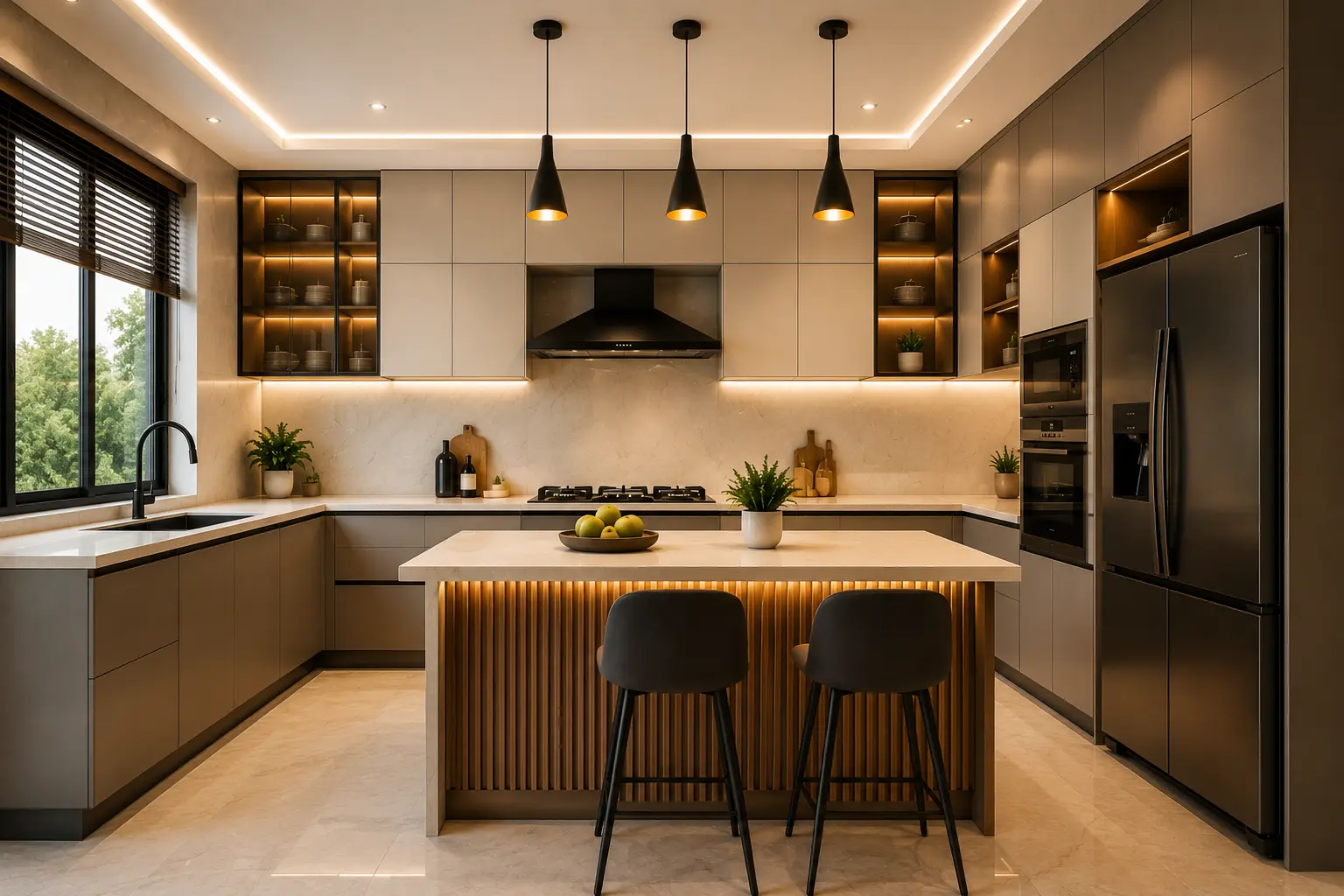
Modular Kitchen Cost in Gurgaon: 2026 Price Guide and Hidden..
-
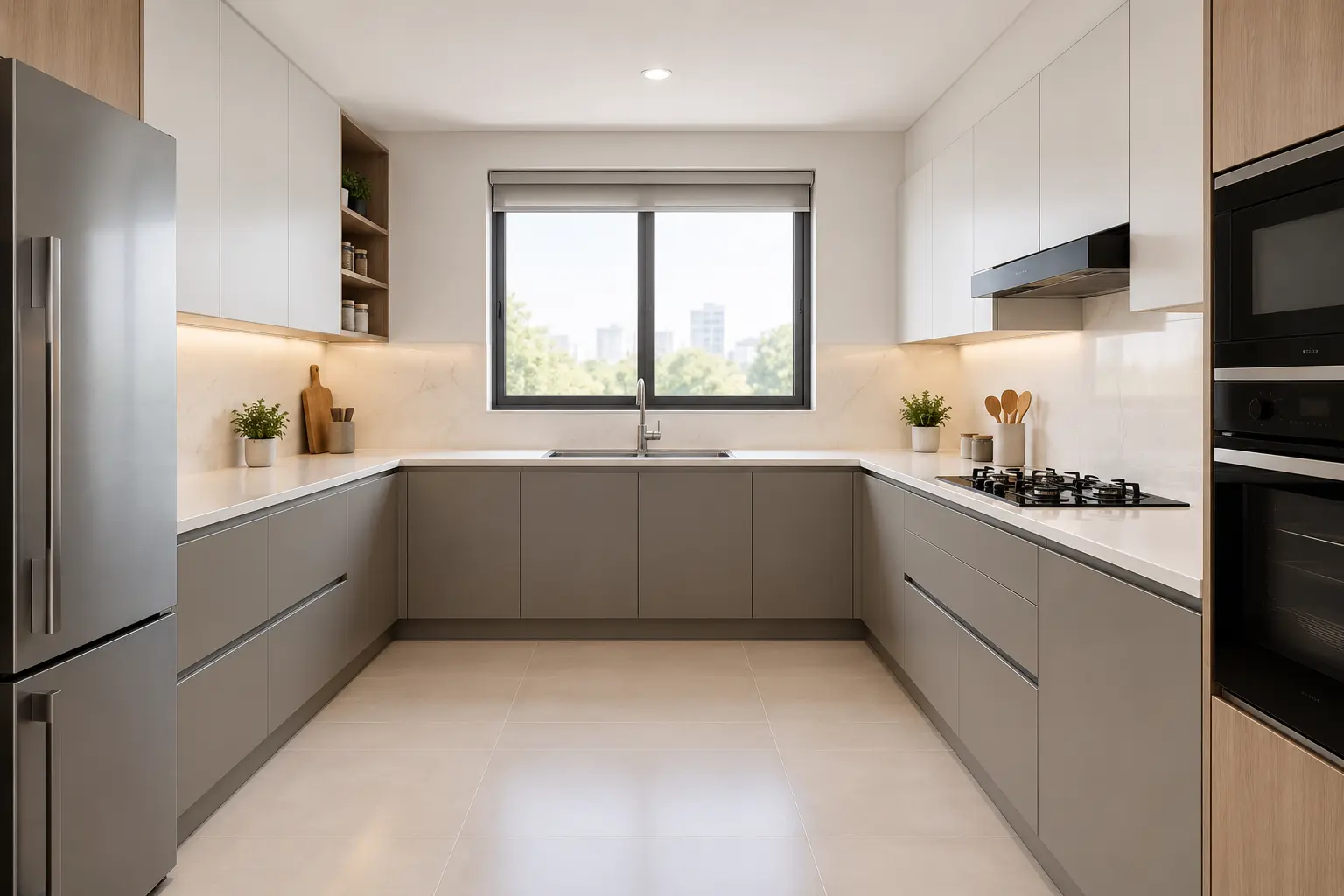
Top 5 Modular Kitchen Manufacturers in Delhi..
-
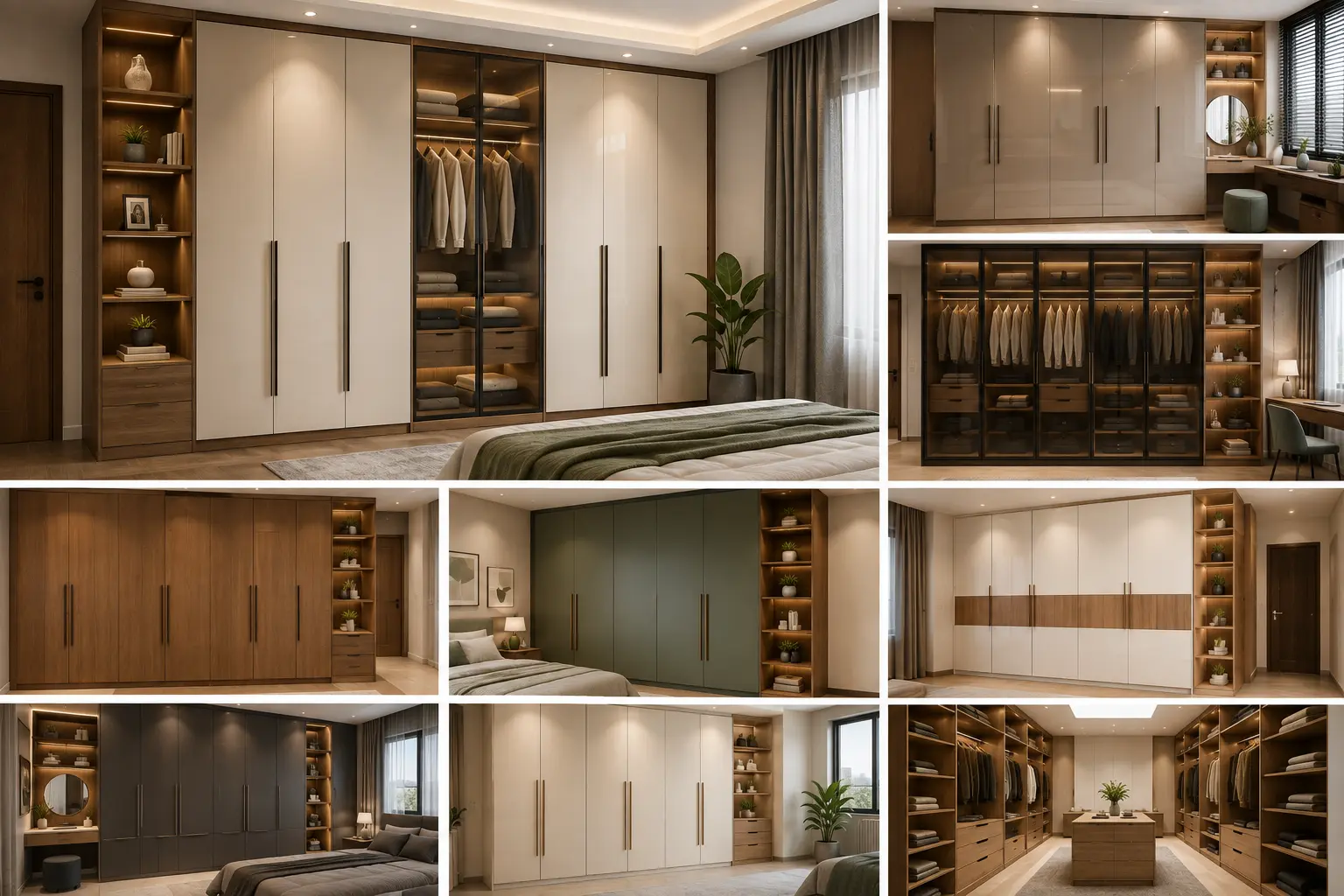
Top 10 Modular Wardrobe Manufacturers in Gurgaon (2026 Guide..
-
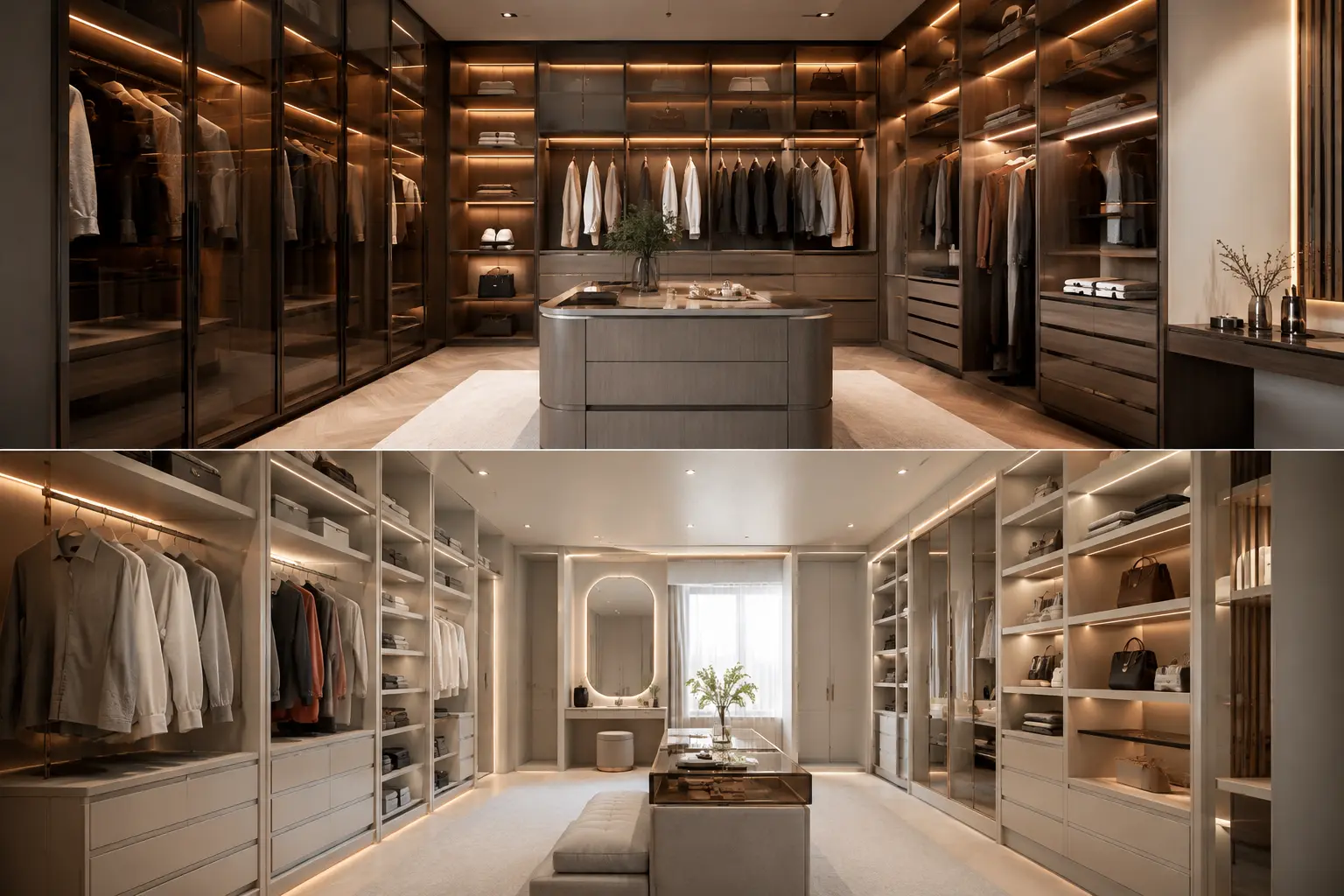
12 Modern Walk-In Wardrobe Ideas for Master Bedrooms (2026 G..
-
8 Contemporary Kitchen Cabinets to Elevate Your Home in 2026..
-
7 Things to Know Before Hiring a Modular Kitchen & Interior ..
-
Luxury Italian Modular Kitchens in Gurgaon: A Complete Desig..
-
Small Bedroom Wardrobe Design Guide: Maximise Space & Storag..