Quick Answer
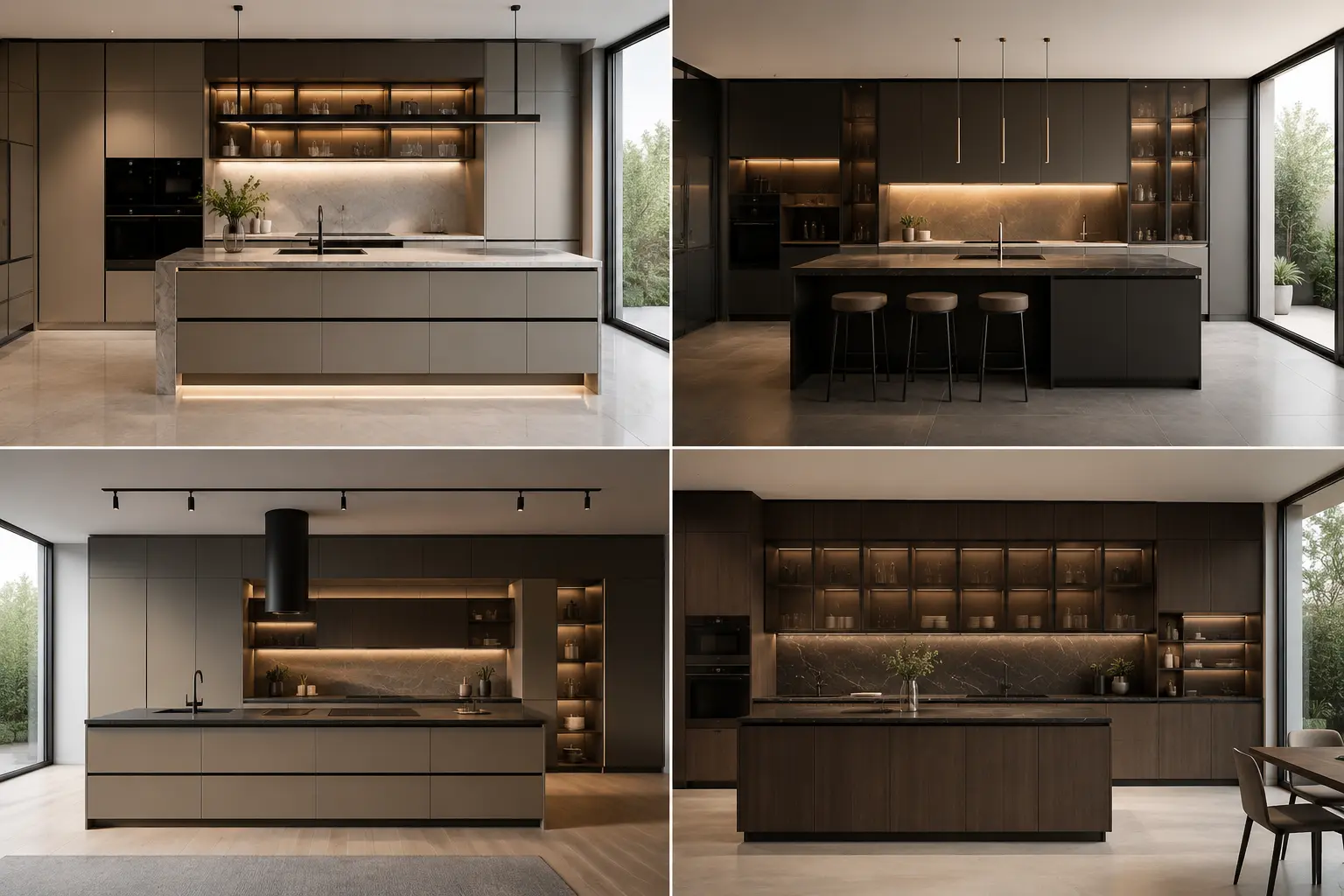
Contemporary kitchen cabinets are defined by clean lines, handle-less shutters, matte or high-gloss finishes, and smart, clutter-free storage. From flat-panel and acrylic finishes to glass-front units and island cabinets, modular kitchen cabinet designs today are built to look sleek while working hard for everyday cooking. This guide walks through eight contemporary cabinet styles and how to pick the right one for your kitchen's layout, whether that's an L-shaped, U-shaped, or parallel kitchen.
What Makes a Kitchen Cabinet "Contemporary"?
Contemporary kitchen cabinets are less about a single material and more about a design language. Flat, unadorned shutters replace ornate panelling. Hardware disappears into push-open or profile-handle systems. Finishes stay in a tight, neutral palette so the kitchen reads as one cohesive surface rather than a collection of parts. It's a look that photographs well and, more importantly, ages well, since there's nothing trend-specific to feel dated in five years.
Contemporary vs. Modern vs. Traditional Cabinets
The three terms get used interchangeably, but they aren't the same thing. Traditional cabinets lean on raised panels, warm wood tones, and visible hardware. Modern is a specific mid-century-rooted style with its own material vocabulary. Contemporary is simply "of the moment" — it borrows modern's clean lines but stays flexible on finish, colour, and texture, which is why it suits such a wide range of Indian homes.
8 Contemporary Kitchen Cabinet Designs to Consider
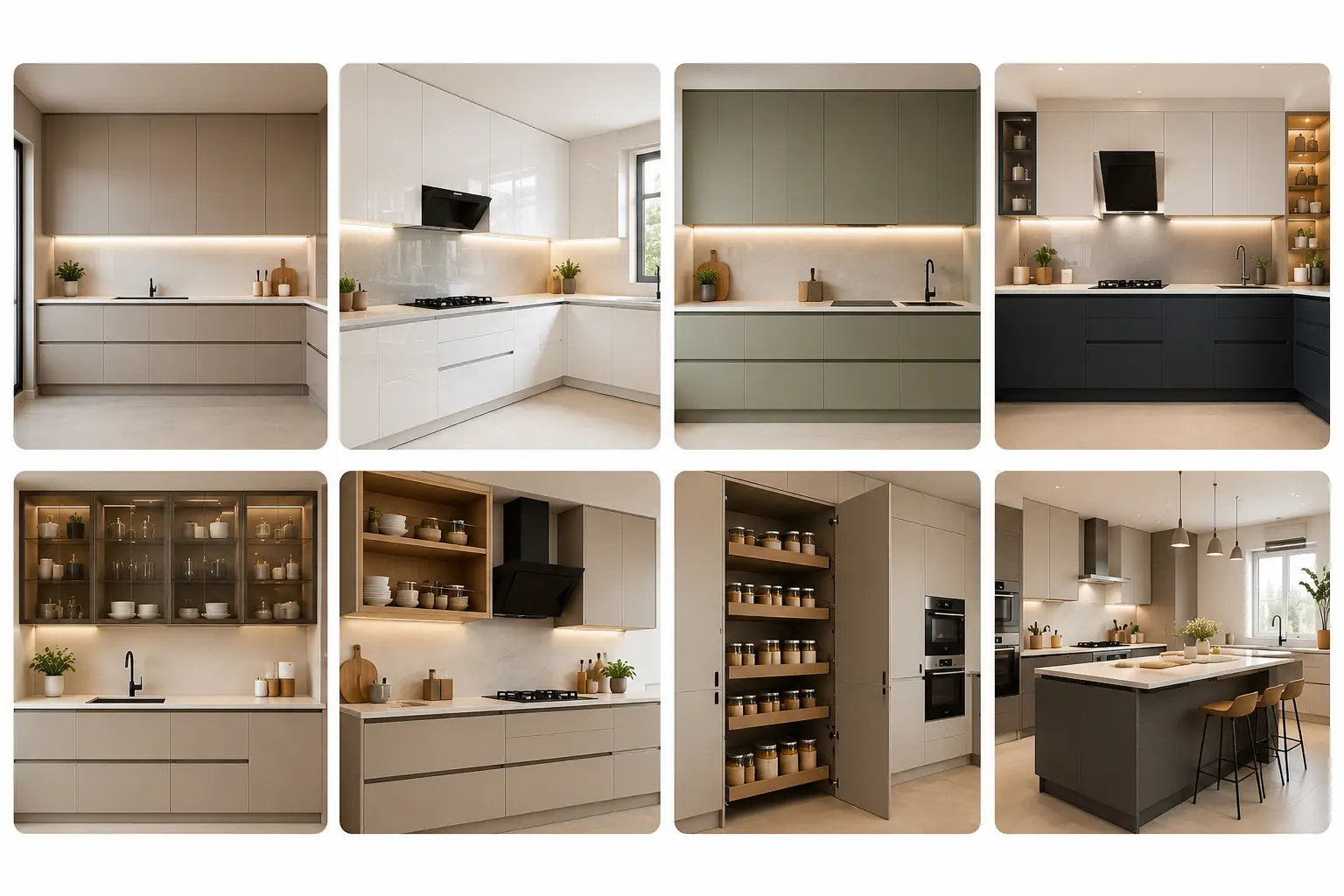
Here are eight modular kitchen cabinet designs worth considering if you're planning a contemporary kitchen, along with the layouts they tend to suit best.
1. Handle-less Flat-Panel Cabinets
A flat, seamless shutter face with no visible handles is the most recognisable contemporary look. Cabinets open via push-to-open mechanisms or a recessed profile groove, which keeps the overall kitchen front uninterrupted. It works especially well in compact kitchens, where visual clutter is the enemy of a spacious feel.
2. High-Gloss Acrylic Shutter Cabinets
Acrylic shutters bring a mirror-like sheen that bounces light around the room, making them a popular choice for kitchens that don't get much natural daylight. They're bold, easy to wipe clean, but do show fingerprints and water spots more readily than matte alternatives, so they suit households that don't mind a bit of extra upkeep.
Read More: Best Kitchen Cabinet Materials in India (2026 Guide) | BWP vs HDHMR
3. Matte-Finish Laminate Cabinets
Matte laminate is the practical, high-traffic-family answer to gloss finishes. It hides smudges and scratches far better, comes in an equally wide colour range, and costs less to maintain over time. For homes where the kitchen is in constant use, matte is usually the lower-stress choice.
4. Two-Tone Cabinet Combinations
Pairing two complementary shades — a darker base with a lighter upper, or a neutral body with an accent island — adds depth without breaking the contemporary look. This works particularly well in larger U-shaped or G-shaped kitchens, where there's enough surface area for the contrast to read intentionally rather than busy.
5. Glass-Front Upper Cabinets
Swapping a few upper shutters for glass panels breaks up a wall of solid cabinetry and gives you a spot to display crockery or glassware. It's a detail that works best used sparingly — one or two units, not the whole run — so the kitchen doesn't feel like an open display case that also needs constant tidying.
6. Open Shelving Mixed with Closed Cabinets
Alternating open shelves with closed units adds visual lightness, especially useful in compact or inline kitchens where floor-to-ceiling closed cabinetry can feel heavy. The trade-off is that open shelves need more regular tidying and dusting, so they suit cooks who like their everyday items on show.
7. Tall Pantry or Larder Unit Cabinets
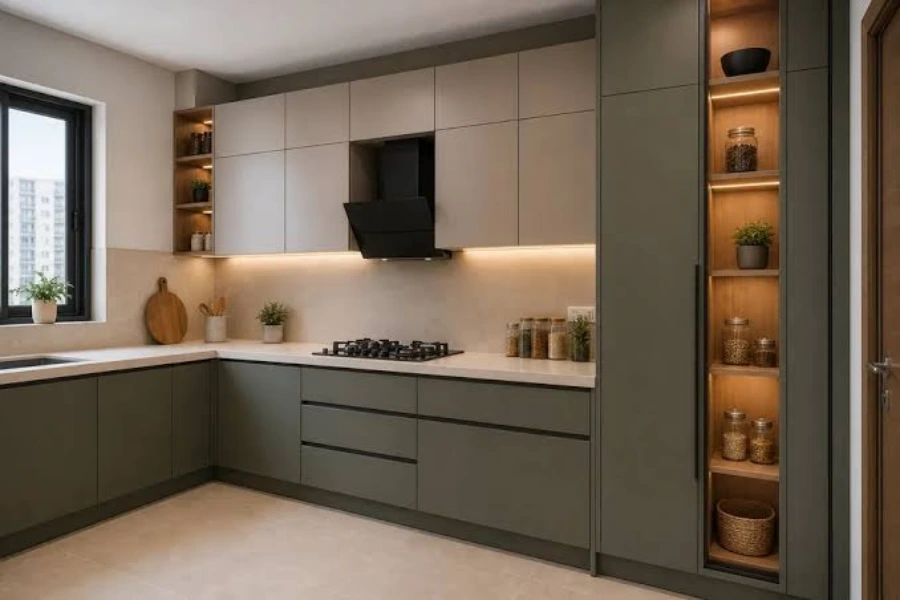
A full-height pantry unit consolidates dry storage into one column, freeing up the rest of the kitchen for prep and cooking zones. It's a strong fit for U-shaped and G-shaped layouts that already have a natural corner or end wall for a tall unit, and it keeps the contemporary cabinet run visually uninterrupted elsewhere.
Also Read: Kitchen Island Ideas for Small Kitchens: Smart Space-Saving Designs for Indian Homes
8. Island Cabinet Units
Where space allows, a central island built with the same contemporary cabinet finish as the rest of the kitchen adds prep space, seating, or extra storage in one move. It suits larger L-shaped and U-shaped kitchens best, since it needs enough clearance on all sides to stay functional rather than becoming an obstacle.
Which Contemporary Cabinet Style Suits Your Kitchen Layout?
The table below is a quick reference for matching a cabinet style to your kitchen's shape and how much upkeep you're comfortable with.
|
Cabinet Style |
Best Kitchen Shape |
Ideal For |
Maintenance Level |
|
Handle-less flat-panel |
L-shaped, U-shaped |
Small to mid-size kitchens |
Low |
|
High-gloss acrylic |
Parallel, Italian |
Homes wanting a bold, reflective look |
Moderate |
|
Matte-finish laminate |
L-shaped, G-shaped |
High-traffic family kitchens |
Low |
|
Two-tone combination |
U-shaped, G-shaped |
Larger kitchens with distinct zones |
Moderate |
|
Glass-front upper units |
Inline, Parallel |
Display-style storage |
Moderate |
|
Open shelving + closed cabinets |
Inline, L-shaped |
Compact kitchens needing visual breathing room |
Low to moderate |
|
Tall pantry/larder unit |
U-shaped, G-shaped |
Kitchens needing dedicated dry-storage |
Low |
|
Island cabinet unit |
L-shaped, U-shaped (with space) |
Larger layouts with room for a central island |
Moderate |
Almac designs across all of these layouts — L-shaped, G-shaped, U-shaped, Italian, inline, and parallel — so the cabinet style you like can be built into the layout that actually fits your kitchen's footprint.
How Do You Choose the Right Cabinet Material and Finish?
Popular Finish Options
Matte, high-gloss, laminate, and acrylic remain the most commonly used finishes for modular kitchen cabinet designs today. Each carries a different balance of look, light reflection, and day-to-day upkeep, which is why it's worth deciding on maintenance tolerance before finish.
Durability and Upkeep Considerations
Beyond looks, think about how the kitchen actually gets used. A high-gloss finish in a heavy-cooking household will need more frequent wiping down than the same layout in matte. Corner units and tall cabinets near the hob also see more grease exposure, so finish choice there matters more than on cabinets further from the cooktop.
Why Choose Almac for Your Contemporary Kitchen Cabinets?
If you're in Delhi NCR and weighing up who to work with, here's what's confirmed about Almac Modular Kitchens & Interiors:
● 15+ years of experience designing and executing modular kitchens
● Based in Sector 7, Dwarka, serving clients across the Dwarka Expressway corridor and wider Delhi NCR
● End-to-end involvement from design through execution, rather than handing off midway
● Designs available across L-shaped, G-shaped, U-shaped, Italian, inline, and parallel kitchen layouts
● Customisation options to match different budgets and space constraints
You can see examples of past work and layout options on the Almac kitchen designs page, or get in touch directly through the contact page to discuss a contemporary cabinet plan for your own kitchen.
Read More: Small Modular Kitchen Design Ideas for Compact Spaces | Almac
Bringing Your Contemporary Kitchen to Life
Choosing the right contemporary kitchen cabinets comes down to balancing your aesthetic preferences with the practical realities of your daily cooking routine. Whether you lean toward the sleek, handle-less look of flat-panel acrylics or the low-maintenance practicality of two-tone matte laminates, the right design should make your kitchen feel both spacious and effortless to use.
Because contemporary design is highly adaptable, these cabinet styles can be tailored to maximise the efficiency of any layout—from a compact parallel setup to a spacious U-shaped design with a central island.
If you are in the Delhi NCR region and ready to upgrade your space, Almac Modular Kitchens & Interiors brings over 15 years of expertise to help you navigate these choices. By managing everything from the initial design consultation to the final installation, their team ensures your new kitchen is executed seamlessly. Reach out to Almac through their contact page to start planning or arrange a visit to their Dwarka showroom to experience the materials, finishes, and hardware firsthand.
FAQs
Q1 What is the difference between modular and contemporary kitchen cabinets?
"Modular" describes how the kitchen is built — as prefabricated units assembled on-site. "Contemporary" describes the style of those units. A modular kitchen can be built in a contemporary, traditional, or any other style; the two terms describe different things and aren't interchangeable.
Q2 How much does a contemporary modular kitchen cabinet cost? Cost depends on finish, cabinet size, hardware, and layout, so it varies from kitchen to kitchen. Almac offers customisation across different budgets, and the most reliable way to get an accurate number is a direct consultation rather than a general estimate.
Q3 Which cabinet finish is easiest to maintain? Matte laminate finishes generally need the least upkeep, since they resist fingerprints and minor scratches better than high-gloss or acrylic surfaces. High-gloss and acrylic look striking but need more frequent wiping to stay smudge-free.
Q4 Can contemporary cabinets be customised for small kitchens? Yes. Handle-less flat-panel units, tall pantry columns, and open-shelf combinations are all well-suited to smaller footprints, as they reduce visual bulk while maintaining storage capacity.
Q5 Does Almac offer a showroom visit to see cabinet finishes in person? Almac's site recommends visiting in person to see finishes and materials firsthand before deciding. You can arrange this through the contact page.
-
What Is a Carcass in a Modular Kitchen? Meaning, Materials &..
-
How to Plan Home Interiors in Delhi-NCR (2026): Modular Kitc..
-
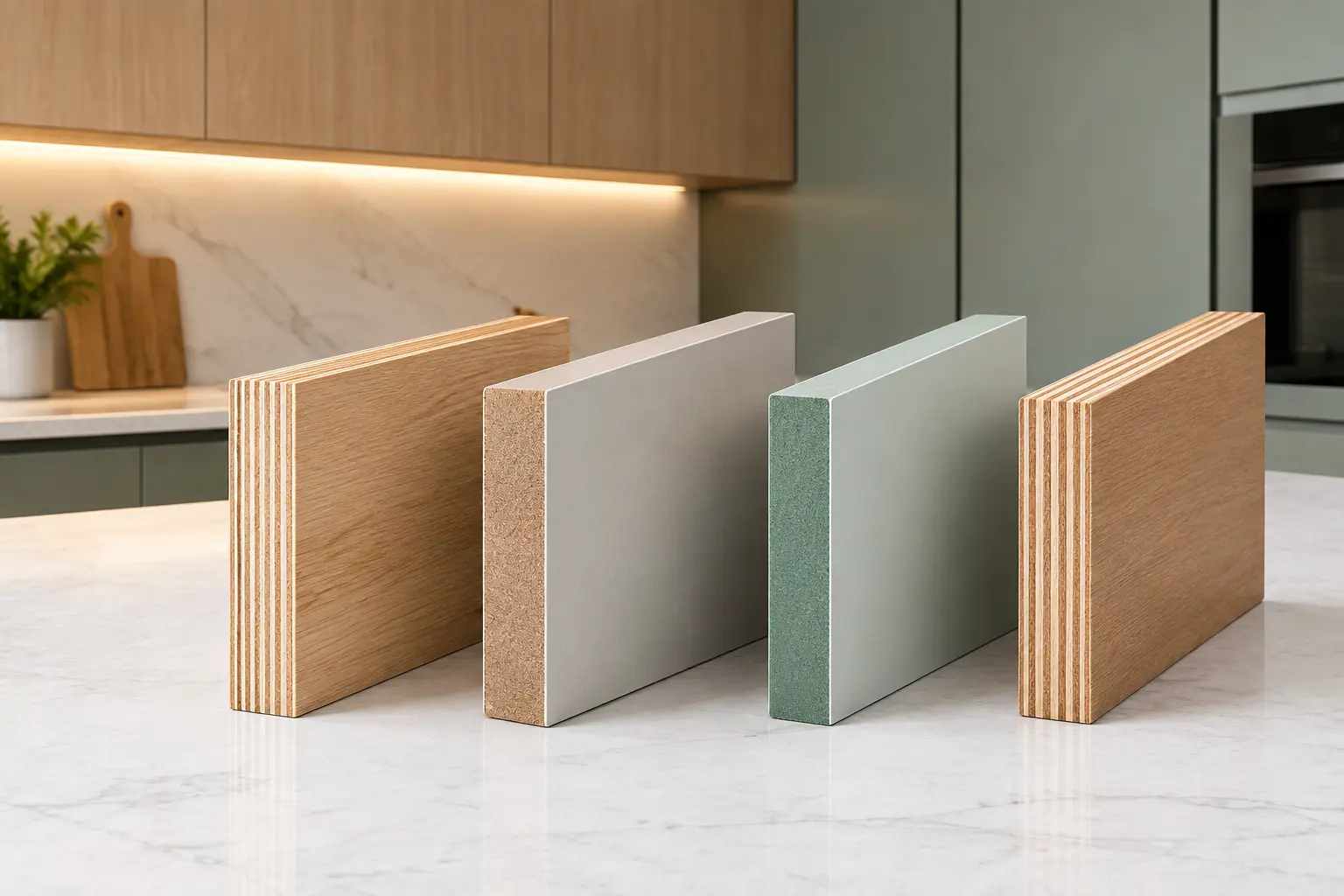
Best Materials for Modular Kitchens in India 2026: Plywood, ..
-
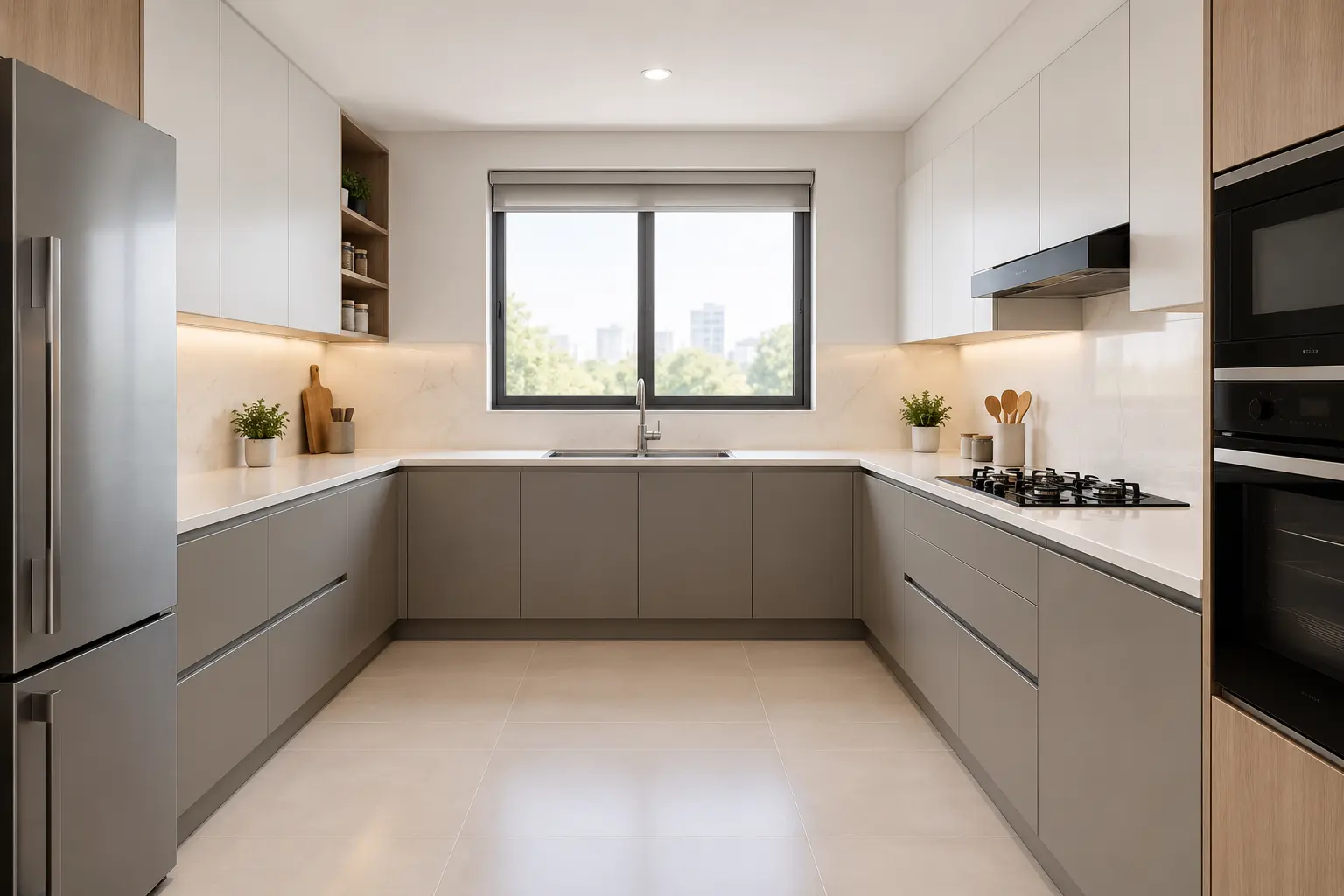
Modular Kitchen Cost in Gurgaon: 2026 Price Guide and Hidden..
-
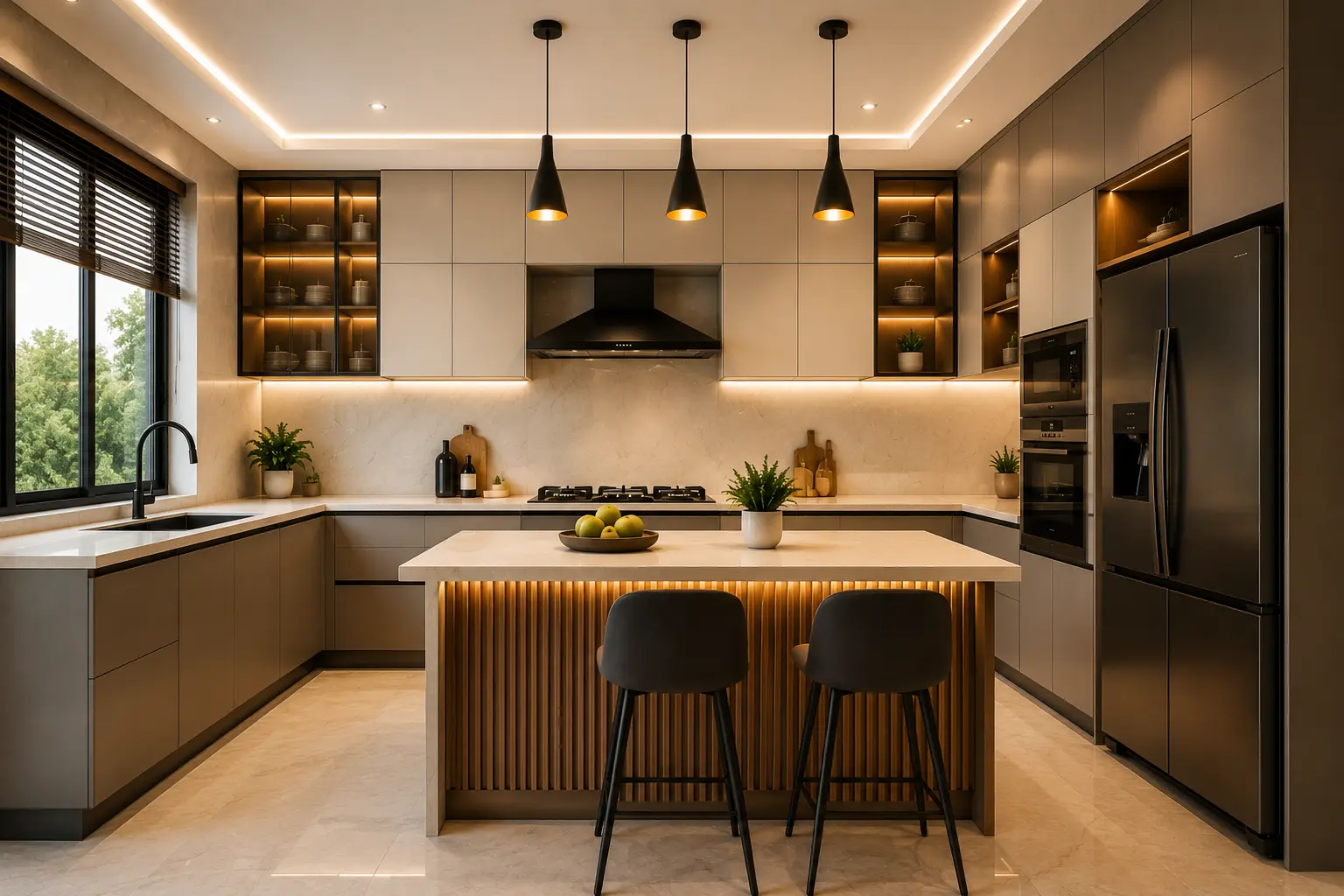
Top 5 Modular Kitchen Manufacturers in Delhi..
-
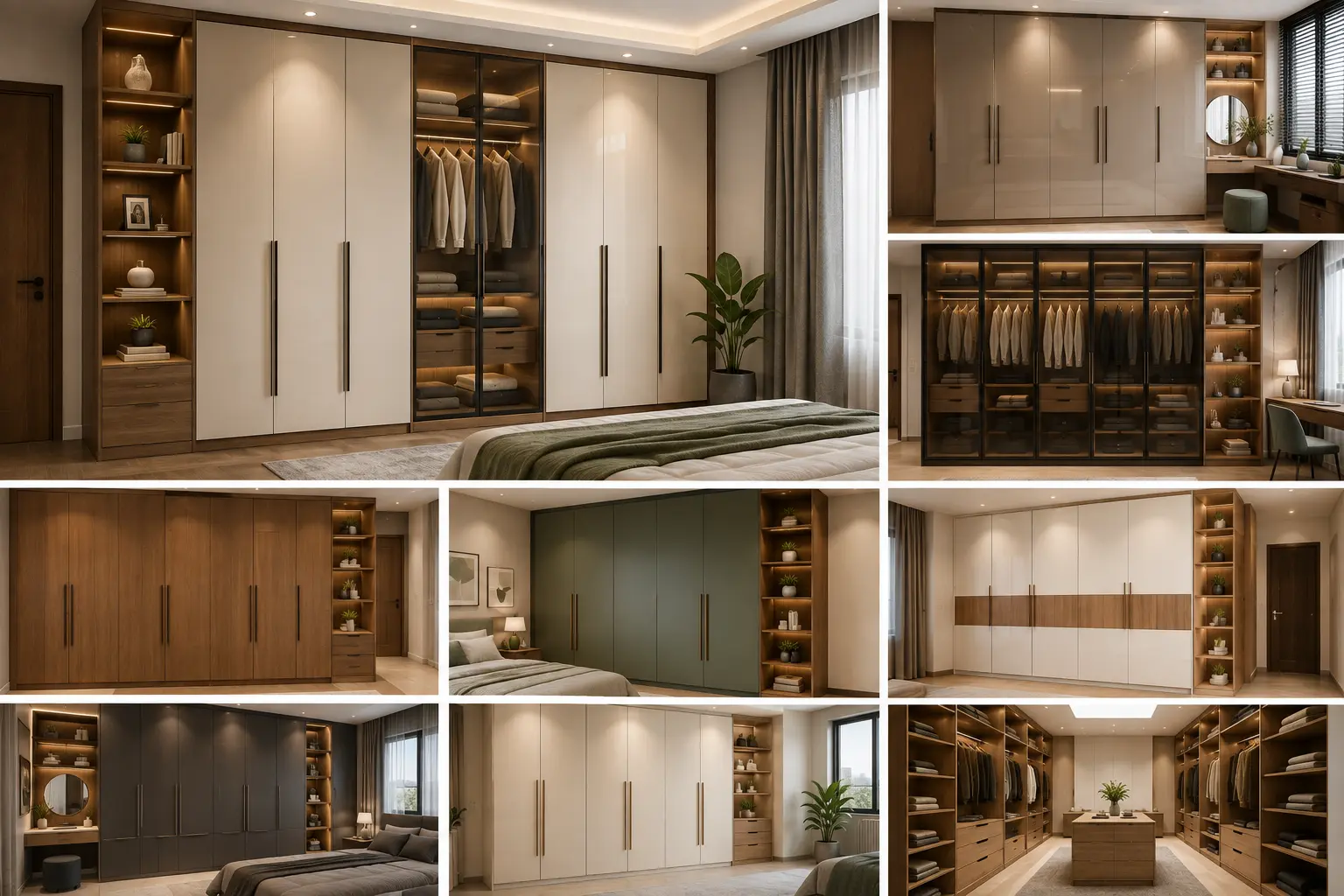
Top 10 Modular Wardrobe Manufacturers in Gurgaon (2026 Guide..
-
12 Modern Walk-In Wardrobe Ideas for Master Bedrooms (2026 G..
-
8 Contemporary Kitchen Cabinets to Elevate Your Home in 2026..

-
7 Things to Know Before Hiring a Modular Kitchen & Interior ..
-
Luxury Italian Modular Kitchens in Gurgaon: A Complete Desig..