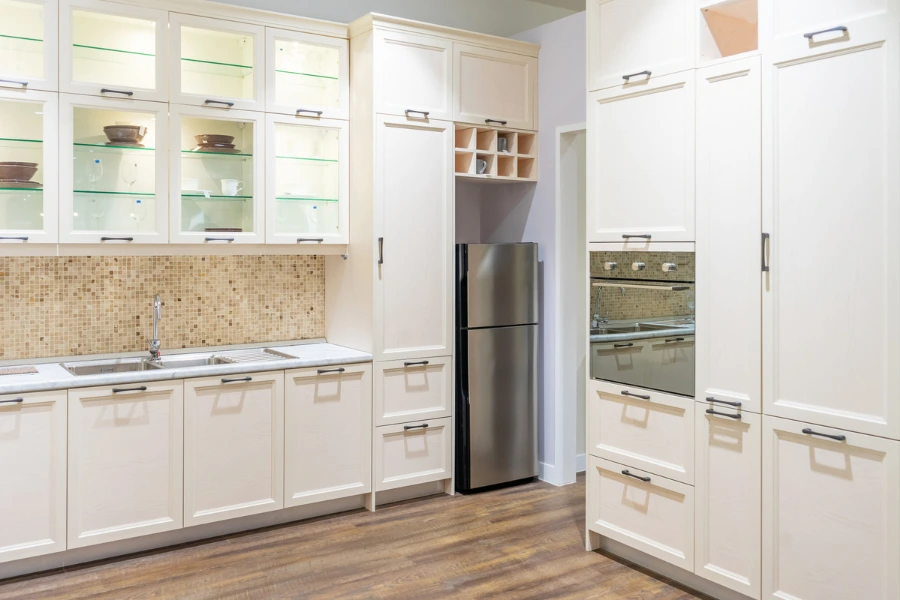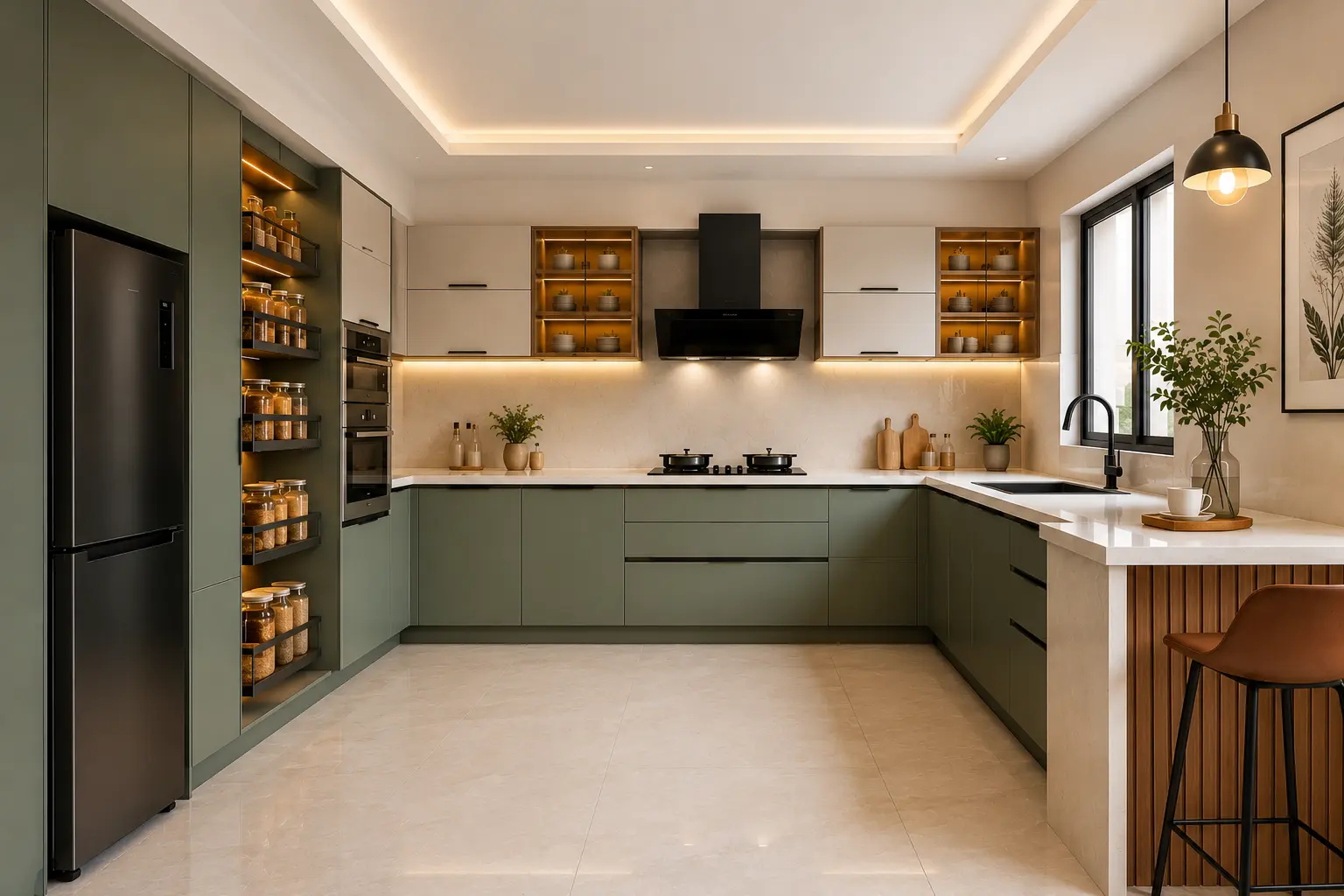
At a Glance
|
Feature |
Benefit |
|
Two-wall layout |
Efficient movement and workflow |
|
Open design |
Creates a spacious feel |
|
Corner utilisation |
Increases storage potential |
|
Flexible configuration |
Suitable for apartments and villas |
|
Easy customisation |
Adapts to different interior styles |
TL;DR
An L-shaped modular kitchen is one of the most efficient layouts for Indian homes. By using two adjoining walls, it creates a functional work triangle, maximises corner storage, and keeps the centre of the kitchen open for easy movement. Whether you live in a compact apartment or a spacious villa, smart planning, vertical storage, and durable materials can help you create a kitchen that is practical, organised, and visually appealing.
Why L-Shaped Modular Kitchens Continue to Be a Popular Choice
The kitchen is no longer just a place for cooking. It has become a multifunctional space where families gather, meals are prepared, and daily routines begin and end. As a result, homeowners are looking for kitchen layouts that offer both functionality and aesthetics.
Among the various layouts available today, the l shaped modular kitchen remains one of the most practical options. Its design uses two adjoining walls to create a natural workflow while keeping the space open and easy to navigate.
Unlike layouts that can feel cramped or restrictive, an L-shaped kitchen balances storage, countertop space, and movement. It works equally well in compact apartments, builder floors, and large independent homes, making it one of the most versatile modular kitchen solutions available.
However, getting the most from an L-shaped kitchen requires more than selecting attractive cabinets and countertops. The layout must be carefully planned to support everyday activities, storage needs, and future requirements.
Understanding the L-Shaped Kitchen Layout
An l shaped kitchen design consists of cabinets and countertops arranged along two connected walls, forming the shape of the letter "L".
This configuration naturally divides the kitchen into different functional zones. One side can accommodate cooking activities, while the other can be used for preparation, cleaning, or storage.
The layout offers several advantages:
-
Better movement between work areas
-
More countertop space compared to straight kitchens
-
Improved corner utilisation
-
Flexibility to add dining counters or islands
-
Open and spacious appearance
Because of these benefits, the l type modular kitchen is often considered one of the most efficient layouts for modern Indian homes.
Quick Answer: Why Choose an L-Shaped Modular Kitchen?
An L-shaped modular kitchen offers an excellent balance of storage, workspace, and accessibility. Its two-wall layout creates an efficient work triangle between the sink, hob, and refrigerator while leaving enough open space for comfortable movement. This layout is ideal for small apartments, family homes, and open-plan interiors because it adapts easily to different room sizes and lifestyles.
Why Do Some L-Shaped Kitchens Underperform?
Many homeowners assume that choosing the right layout automatically guarantees a functional kitchen. In reality, poor planning can significantly reduce the effectiveness of even the best kitchen designs.
-
Inefficient Corner Usage
The corner is often the most neglected area of the kitchen. Without specialised storage systems, it can become difficult to access and may end up as wasted space.
-
Poor Appliance Placement
If the refrigerator, sink, and hob are positioned too far apart, cooking becomes less efficient. Excessive movement can make even simple tasks feel time-consuming.
-
Lack of Countertop Space
Many kitchens focus heavily on storage while overlooking preparation areas. Limited workspace can quickly become frustrating during daily cooking.
-
Insufficient Storage Planning
Storage should be designed around actual household needs rather than generic cabinet configurations. A family that cooks frequently requires very different storage solutions compared to occasional users.
-
Inadequate Lighting
Even a well-designed kitchen can become inconvenient if task areas are poorly illuminated. The success of an L-shaped kitchen depends on how effectively these challenges are addressed during the planning stage.
Five Ways to Maximise an L-Shaped Modular Kitchen
1. Design Around the Work Triangle
One of the most important principles in kitchen planning is the work triangle.
This concept connects the three most frequently used areas:
-
Refrigerator
-
Sink
-
Cooking hob
When these elements are positioned efficiently, movement between tasks becomes seamless.
For example, ingredients can be taken from the refrigerator, prepared near the sink, and moved directly to the cooking zone without unnecessary walking.
A properly planned work triangle improves convenience, reduces fatigue, and supports a smoother cooking experience.
Read More: Top 10 Latest Modular Kitchen Designs in Gurgaon 2026
2. Transform Corner Spaces into Functional Storage
The corner often determines how successful an l shaped modular kitchen will be.
Instead of allowing this area to become inaccessible, homeowners can install specialised corner storage systems such as:
-
Magic corner units
-
Pull-out corner baskets
-
Carousel storage systems
-
LeMans corner units
These solutions allow items stored deep within the cabinet to be accessed easily.
The result is greater storage capacity without increasing the overall kitchen footprint.
3. Create Dedicated Functional Zones
One common mistake in kitchen planning is mixing multiple activities within the same area.
An efficient modular kitchen layout plan separates the kitchen into dedicated zones.
-
Preparation Zone
Used for chopping, mixing, and organising ingredients.
-
Cooking Zone
Includes the hob, chimney, spices, oils, and frequently used utensils.
-
Cleaning Zone
Includes the sink, dishwashing area, and waste management systems.
This zoning approach helps maintain organisation and improves overall workflow. It also allows multiple family members to use the kitchen simultaneously without interfering with one another.
4. Maximise Vertical Storage
Many kitchens run out of storage not because they are too small, but because vertical space is underutilised.
Floor-to-ceiling cabinets can significantly increase storage capacity while maintaining a clean appearance.
Consider incorporating:
-
Tall pantry units
-
Appliance storage towers
-
Loft cabinets
-
Pull-out grocery organisers
Vertical storage is particularly beneficial in urban homes where every square foot matters.
A well-designed storage strategy often eliminates the need for additional furniture or external storage solutions.
5. Optimise the Kitchen Platform
The l shaped kitchen platform serves as the primary workspace for meal preparation.
Its dimensions and material selection directly affect functionality and maintenance requirements.
Recommended Platform Features
-
Comfortable working height
-
Sufficient depth for preparation
-
Durable and heat-resistant material
-
Easy-to-clean surface
For Indian households, quartz and granite remain among the most practical countertop materials due to their durability and low maintenance requirements.
How to Make a Small L-Shaped Kitchen Feel Bigger
One of the greatest advantages of an L-shaped layout is its ability to create an open and spacious feel, even in compact homes.
Several design techniques can further enhance this effect.
-
Use Light Colours: Lighter shades reflect natural and artificial light, making the kitchen appear larger and brighter.
-
Reduce Visual Clutter: Handleless cabinets, concealed storage, and integrated appliances create a cleaner appearance.
-
Introduce Layered Lighting: Combining ambient, task, and accent lighting improves both functionality and visual depth.
-
Choose Reflective Finishes: Gloss finishes, glass elements, and polished surfaces help bounce light around the room.
-
Maintain Open Sightlines: Avoid overcrowding the space with excessive shelving or decorative elements.
Small kitchens often benefit more from thoughtful planning than from increased square footage.
Read More: Top 10 Modern Kitchen Furniture Designs & Ideas for Homes
L-Shaped Kitchen Interior Design Ideas for Different Homes
-
For Apartments
Compact apartments require smart storage and efficient layouts.
Recommended features include:
-
Tall storage units
-
Corner organisers
-
Integrated appliances
-
Light colour palettes
-
For Family Homes
Larger households typically require greater storage and workspace.
Consider:
-
Extended countertops
-
Larger pantry systems
-
Additional preparation zones
-
Multi-user layouts
-
For Premium Homes
Luxury kitchens can incorporate advanced features such as:
-
Kitchen islands
-
Breakfast counters
-
Built-in appliances
-
Smart lighting systems
The best l shaped kitchen interior design is one that reflects the homeowner's lifestyle rather than simply following trends.
Practical Features Worth Adding to an L-Shaped Kitchen
While cabinets and countertops receive most of the attention, smaller additions often have the greatest impact on daily convenience.
Useful upgrades include:
-
Pull-out pantry units
-
Cutlery organisers
-
Built-in waste segregation systems
-
Appliance garages
-
Bottle pull-outs
-
Under-cabinet lighting
-
Hidden charging stations
These features improve organisation and enhance the overall user experience.
Also Read: 10 Bold Kitchen Furniture Design Shifts for 2026 | Almac
Why Planning Matters More Than Finishes
Many homeowners spend significant time choosing colours, laminates, and hardware while paying less attention to layout planning.
However, a beautifully finished kitchen with poor functionality will quickly become frustrating to use.
The most successful l shaped modular kitchen designs begin with understanding how the space will be used every day.
Questions to consider include:
-
How many people cook regularly?
-
What storage requirements exist?
-
How often are appliances used?
-
Is future expansion likely?
-
Are there specific accessibility needs?
Answering these questions before finalising the design helps create a kitchen that remains practical for years to come.
Conclusion
An L-shaped modular kitchen offers the perfect balance of functionality, flexibility, and visual appeal. Its open layout, efficient workflow, and adaptability make it suitable for a wide range of homes and lifestyles.
However, the true success of an L-shaped kitchen lies in thoughtful planning. From creating an efficient work triangle and optimising corner storage to maximising vertical space and selecting the right platform materials, every design decision contributes to the overall performance of the kitchen.
At Almac Modular Kitchens & Interiors, kitchen design goes beyond aesthetics. Every layout is carefully planned to maximise usability, storage, and long-term value, ensuring homeowners receive a kitchen that not only looks impressive but works effortlessly every day.
FAQs
Q1. What is the ideal size for an L-shaped modular kitchen? The ideal size of an L-shaped modular kitchen depends on the available space and the household's requirements. For comfortable movement and functionality, a kitchen should ideally have at least 8 ft. x 10 ft. of usable space. Larger kitchens can accommodate additional features such as breakfast counters, islands, or tall pantry units while maintaining an efficient workflow.
Q2. Is an L-shaped modular kitchen suitable for small homes? Yes, an L-shaped modular kitchen is one of the best layouts for small homes and apartments. Since it uses two adjoining walls, it maximises corner space while keeping the centre area open. This creates better movement, improves storage opportunities, and makes compact kitchens appear larger and less cluttered.
Q3. How can I increase storage in an L-shaped kitchen? Storage can be increased by incorporating corner solutions such as magic corner units, pull-out baskets, carousel systems, and LeMans units. Homeowners can also utilise vertical space through floor-to-ceiling cabinets, loft storage, tall pantry units, and modular drawer organisers. Proper planning often adds significant storage without increasing the kitchen's footprint.
Q4. What is the best countertop material for an L-shaped kitchen platform? Quartz and granite are among the most preferred materials for an L-shaped kitchen platform. Quartz offers a non-porous surface, low maintenance, and a modern appearance, while granite provides excellent durability and heat resistance. The right choice depends on budget, design preferences, and cooking habits.
Q5. Which is better: an L-shaped kitchen or a U-shaped kitchen? Both layouts have their advantages. An L-shaped kitchen is generally better for small to medium-sized homes because it provides an open layout, flexible design options, and easier movement. A U-shaped kitchen offers more storage and countertop space but requires more space and can sometimes feel enclosed. The best choice depends on the available space, storage needs, and lifestyle requirements.
Q6 What Is an L-Shaped Modular Kitchen?
An L-shaped modular kitchen features cabinets and countertops arranged along two perpendicular walls, forming an "L" shape. This layout optimises corner space, creates an efficient work triangle between the stove, sink, and refrigerator, and leaves the rest of the room open, making it ideal for both small and large homes.
Q7 Which material is best for modular kitchen cabinets?
BWP (Boiling Water Proof) marine plywood is widely considered the best material for modular kitchen cabinets. It offers exceptional durability, resists warping, and withstands moisture, steam, and heat. For a more budget-friendly yet sturdy alternative in dry areas, high-density fiberboard (HDMR) is also excellent.
-
Top 5 Modular Kitchen Manufacturers in Delhi..
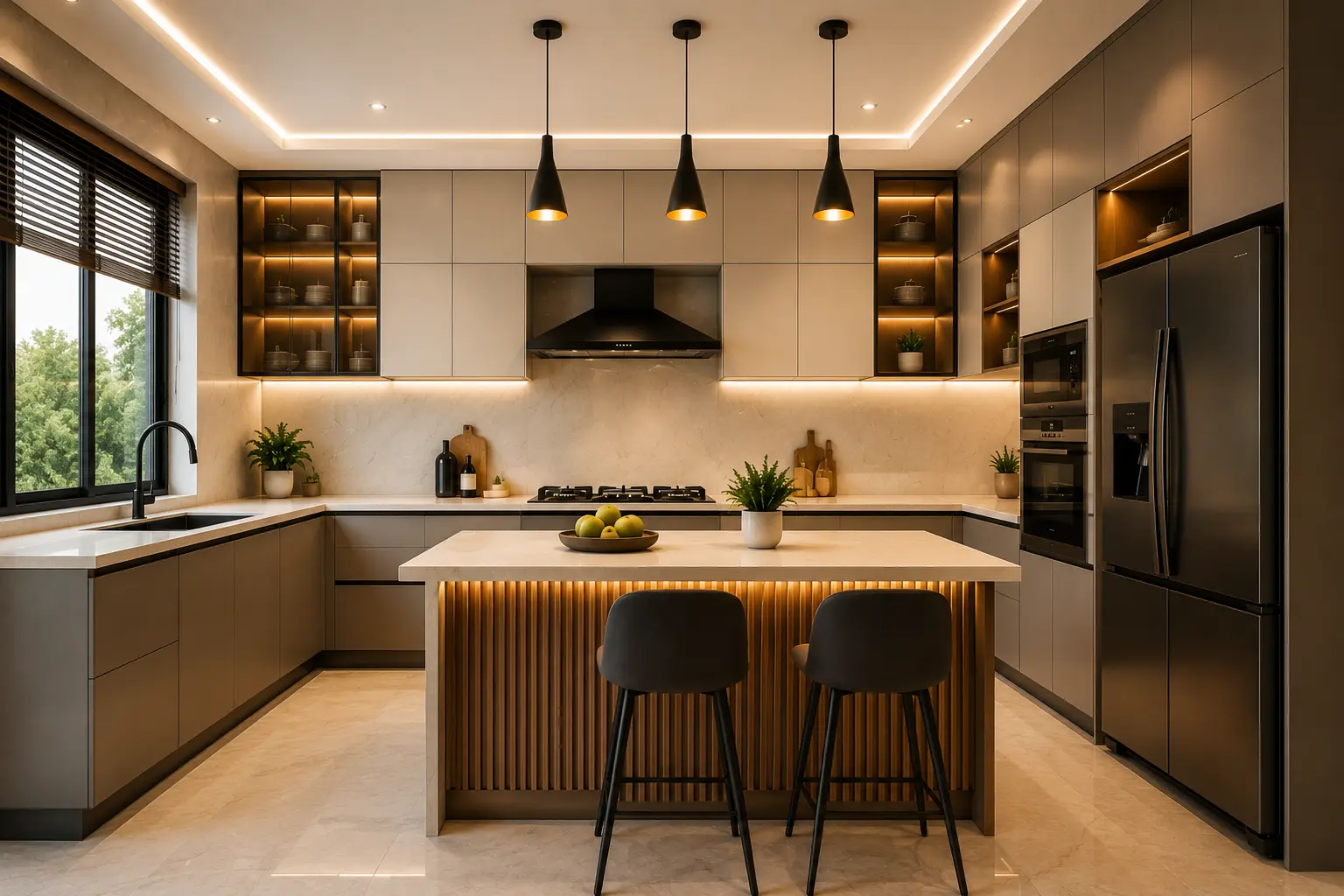
-
Top 10 Modular Wardrobe Manufacturers in Gurgaon (2026 Guide..
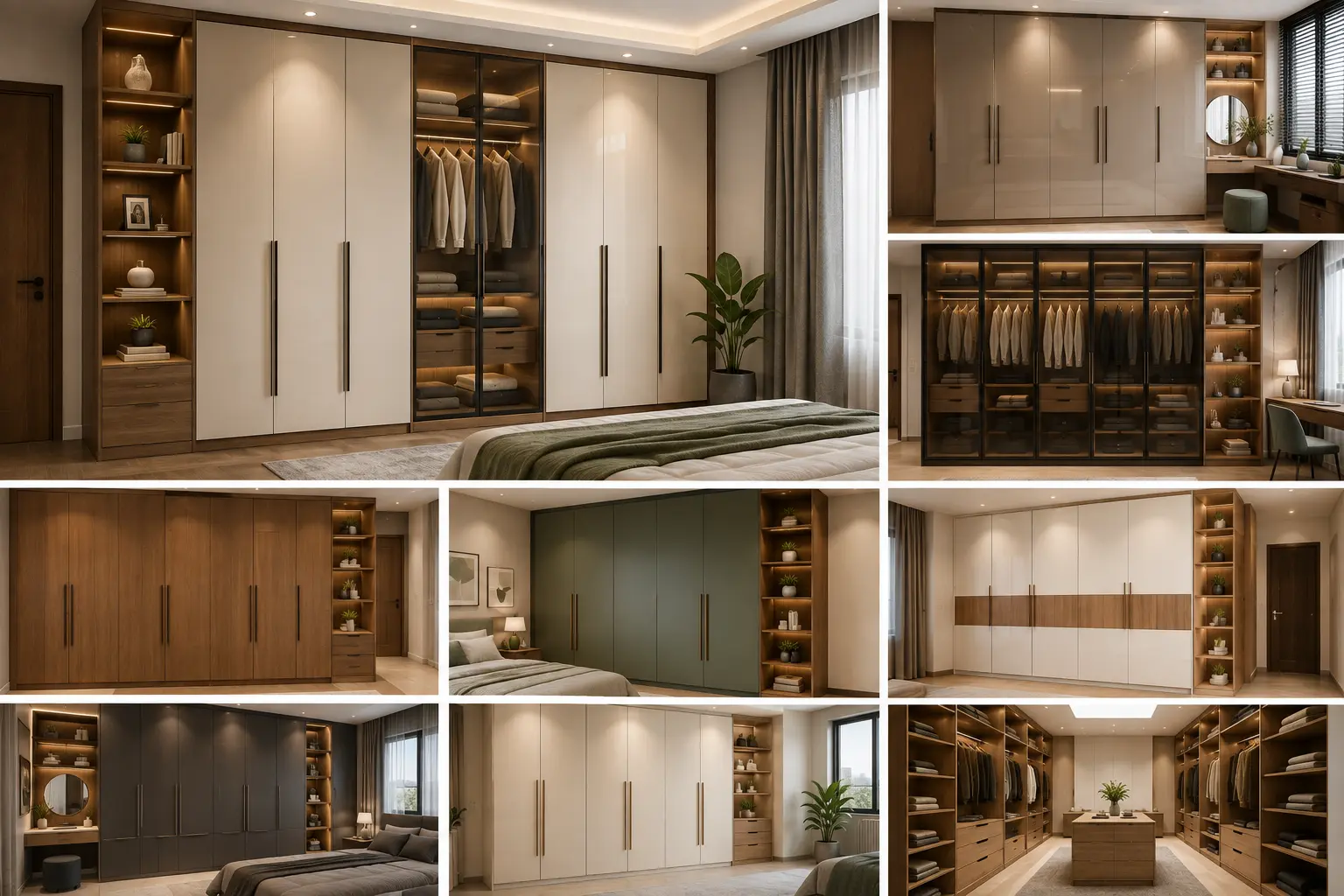
-
12 Modern Walk-In Wardrobe Ideas for Master Bedrooms (2026 G..
-
8 Contemporary Kitchen Cabinets to Elevate Your Home in 2026..
-
7 Things to Know Before Hiring a Modular Kitchen & Interior ..
-
Luxury Italian Modular Kitchens in Gurgaon: A Complete Desig..
-
Small Bedroom Wardrobe Design Guide: Maximise Space & Storag..
-
Kitchen Island Ideas for Small Kitchens in India: Designs, L..
-
L-Shaped Modular Kitchen: Complete 2026 Guide to Smart Desig..

-
Best Kitchen Cabinet Materials in India: BWP Plywood vs HDHM..