QUICK ANSWER
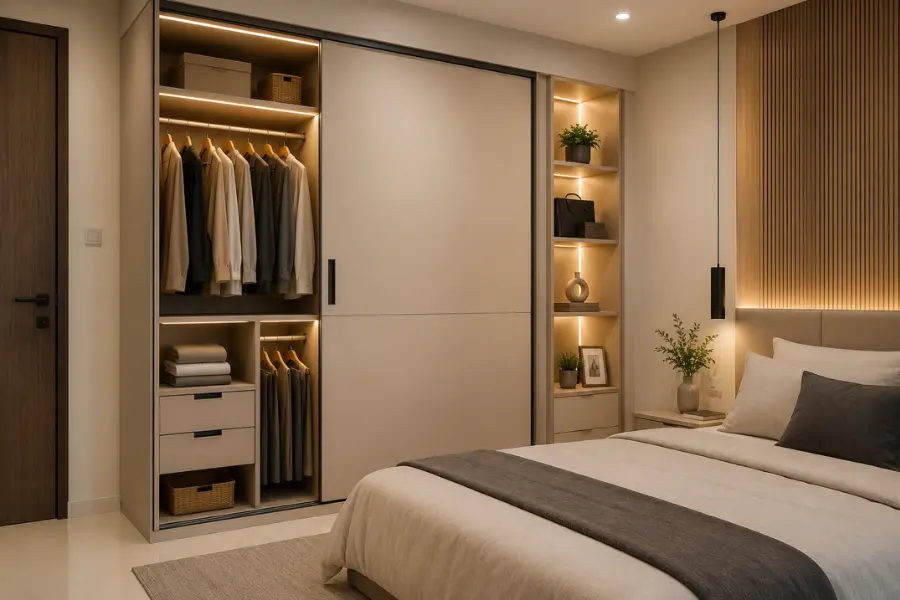
For most small bedrooms, a floor-to-ceiling sliding-door wardrobe with a double-hang internal layout maximises usable space. Sliding doors need no clearance to open, and building to the ceiling reclaims the storage volume that’s otherwise lost to a dusty, unused gap. Openable shutters are still the better choice once a room has enough clear wall opposite the wardrobe for the doors to swing fully open.
A well-planned small bedroom wardrobe design can make a compact room feel organised, spacious, and far more functional. Most small bedrooms in Dwarka, Gurgaon, and across Delhi NCR don’t actually have a space problem; they have a wardrobe that was bought for a different room. The standard hinged almirah that every furniture shop pushes works fine in a 14x14 master bedroom. Move it into a 9x10 second bedroom, and you’ve lost a third of the floor to door swing before you’ve put away a single shirt.
This guide walks through the decisions that actually change how much usable storage you get from a small bedroom: door type, height, internal layout, finish, and what to do with the space around the wardrobe, which most people leave empty.
What Makes a Small Bedroom Wardrobe Design Truly Space-Saving?
The phrase gets used loosely. A wardrobe with a mirror on it isn’t automatically space-saving just because the listing says so. There are really three things that determine whether a wardrobe earns the label in a small bedroom.
• Floor clearance: how much empty floor the door itself needs to open. A hinged door needs the equivalent of its own width again every time it’s used. A sliding door needs none.
• Vertical use: how much of the wall height, floor to ceiling, is actually doing storage work. A wardrobe that stops short of the ceiling isn’t smaller, it’s the same footprint with unused space stacked on top of it.
• Internal efficiency: how the rails, shelves, and drawers inside are arranged. Two wardrobes with identical external dimensions can hold very different amounts, depending purely on how the interiors are laid out.
Get those three right, and a compact wardrobe in a 9x10 room can outperform a poorly configured one in a much bigger space.
Sliding, Openable Shutter, or Walk-In — Which One Fits Your Bedroom?
This is the decision that affects how the room actually feels day to day, and it’s worth more thought than colour or finish.
When does a sliding-door wardrobe make sense?
Almost always, in a small room. The door slides within its own track, so there’s no swing radius to plan around. If the wardrobe sits opposite the bed, beside it, or anywhere along a tight walking path, sliding is usually the only door type that doesn’t create friction every morning.
The trade-off worth knowing about before you commit: you can only access roughly half the wardrobe’s width at a time, since one panel has to cover the section you’re not currently opening. It’s a minor adjustment in how you organise things, keep what you reach for daily on the side you open most, not a real limitation.
When is an openable shutter wardrobe still the better choice?
When the room has genuine clear space on the wall the doors swing into, and you want full-width access without sliding one panel across the other. Two people getting dressed at the same time, or anyone who’d rather see the entire wardrobe at a glance than half of it, will usually prefer this over sliding, but only if there’s room for the doors to open fully without hitting the bed frame or blocking the path to the door.
Can a small bedroom fit a walk-in closet?
Sometimes, and it’s almost never a straightforward yes or no from a brochure; it depends on the exact dimensions of the room and where the bed, windows, and door fall. A walk-in doesn’t need to be large to work; it needs a layout where a narrow aisle plus storage on one or two sides still leaves enough room to move. This is the one decision in this guide that’s genuinely worth a site visit before deciding either way, which is part of why Almac’s space optimisation consultation exists; it’s a short conversation that saves you from ordering the wrong thing.
|
Door Type |
Floor Clearance Needed |
Access |
Best Suited For |
|
Sliding |
None |
Half the wardrobe at a time |
Tight rooms; wardrobe facing or beside the bed |
|
Openable Shutter |
Roughly 18–24 inches per panel |
Full width at once |
Rooms with clear wall space for the doors to swing |
|
Walk-In |
Depends on the layout |
Full access, browseable |
Larger small bedrooms with a workable aisle |
Almac builds all three of these: sliding doors, openable shutters, and walk-in closets, so the choice comes down to the room, not what’s available.
Should a Small Bedroom Wardrobe Go Floor-to-Ceiling?
Yes, in almost every case, and the reasoning has nothing to do with style.
Standard wardrobes stop around seven feet. Most apartment ceilings in Delhi and Gurgaon are between nine and ten feet high. That gap at the top does three things, none of them good: it collects dust that’s awkward to clean and rarely gets cleaned, it visually breaks the wall so the room reads shorter than it is, and it wastes real storage volume, enough for suitcases, seasonal clothing, or spare bedding that currently has nowhere to go.
A wardrobe built all the way to the ceiling closes that gap, recovers the volume, and reads as part of the wall rather than a piece of furniture interrupting it. Since Almac designs each wardrobe to the room’s actual measurements rather than a fixed catalogue size, this isn’t an upgrade tier, it’s simply how the wardrobe gets planned for your ceiling height in the first place.
How Should the Inside of the Wardrobe Be Laid Out?
Two wardrobes with the same outer dimensions can hold noticeably different amounts of clothing, and the difference is almost always in how the inside was planned.
Hanging space is the first thing to get right. Shirts, kurtas, and jackets need around 40 inches of vertical clearance. Full-length dresses and trousers hung by the waist need closer to 60. A wardrobe with one long hanging rail running the full height wastes the bottom third of that space if most of what you own is shirts and casuals. A double-hang layout, two shorter rails stacked instead of one long one, holds close to double the items in the same vertical space, with one full-length section kept aside for whatever genuinely needs it.
The base section matters just as much. Open shelves look tidy on day one and start sliding into disorganised stacks within a week. Drawers hold their shape, folded clothes stay where you put them, and a shoe rack or pull-out hanger unit keeps the rest from competing for the same shelf. These are exactly the kind of fittings Almac offers as wardrobe accessories, pull-out hangers, shoe racks, and built-in organisers, to make a compact wardrobe work harder.
What Else in a Small Bedroom Can Double as Storage?
The wardrobe isn’t the only storage decision in the room, and a few of the most useful ones don’t involve the wardrobe at all.
The floor space under the bed is usually the largest unused volume in a small bedroom. A storage bed with a hydraulic or drawer base turns it into space for seasonal clothes or spare linen without taking up anything extra.
The wall above a door frame and the narrow strip beside a wardrobe or door are two of the most consistently wasted spots in Indian bedrooms, a slim shelf or cabinet in either spot adds real storage without touching the floor. If a bedroom has a recess or alcove, that’s worth building into rather than around; a unit fitted exactly to its dimensions wastes nothing. For a layout that spans the wardrobe, a desk, or built-in shelving in one continuous run, Almac’s furniture design service can cover the pieces around the wardrobe as part of the same project.
Which Finishes Make a Small Wardrobe Feel Bigger, Not Smaller?
Three finish decisions change how a wardrobe reads in a small room more than almost anything else.
• Match the colour to the wall. When there’s little contrast between the wardrobe and the wall behind it, the wardrobe stops registering as a large object in the room and starts reading as part of the wall.
• Use mirror panels on sliding doors. They reflect the room and add a sense of depth, and they remove the need for a separate dressing mirror taking up its own bit of floor.
• Avoid high-contrast fronts. A dark wardrobe against a light wall does the opposite of what most people expect; it creates a visual block that makes the room feel divided rather than spacious.
Almac builds in engineered wood, plywood, glass, laminates, and metal hardware, in both high-gloss and matte finishes, so this comes down to a finish decision rather than a material-availability one.
How Long Does It Take to Design and Install One?
Design typically takes 2–3 days once the room has been measured, and installation is completed within 5–7 working days after that. For anyone planning around a move-in date or a festival deadline, that’s roughly a two-week window from first measurement to a finished wardrobe — worth factoring in before locking in any other renovation timelines for the room.
Ready to Plan Your Wardrobe?
If you’re working with a small bedroom in Dwarka, along Dwarka Expressway, in Gurgaon, or anywhere else in Delhi NCR, the fastest way to know which door type and layout actually fits is a site visit rather than a guess from a brochure. Get in touch with Almac for a free space optimisation consultation.
Conclusion
A well-planned small bedroom wardrobe design is not about fitting more furniture into a compact room; it is about making every inch of available space work efficiently. From choosing the right door type and extending storage up to the ceiling to optimising the internal layout and finishes, each decision contributes to a bedroom that feels organised rather than crowded. By focusing on smart storage solutions and thoughtful design, even the smallest bedroom can offer ample storage while maintaining a comfortable and spacious feel.
Frequently Asked Questions
Q1: Which wardrobe is best for a small bedroom, sliding or openable shutter?
Sliding is the safer default for genuinely tight rooms since it needs no floor clearance to open. Openable shutters are worth choosing only if the wall the doors swing into has enough clear space for them to open fully without blocking a walking path.
Q2: Does a floor-to-ceiling wardrobe actually add usable storage, or just height?
It adds real, usable volume. The gap between a standard seven-foot wardrobe and a nine- or ten-foot ceiling is enough space for suitcases, seasonal clothing, and spare linen that would otherwise have nowhere to go.
Q3: Can a small bedroom in Delhi or Gurgaon fit a walk-in closet?
Sometimes, depending on the room’s exact dimensions and where the bed and doors fall. It’s the one decision in this guide worth checking against the actual room rather than deciding from general rules, which is what a space optimisation consultation is for.
Q4 What materials are used in a modular wardrobe, and do they affect how the room feels?
Engineered wood, plywood, glass, laminates, and metal hardware are the standard materials, available in high-gloss or matte finish. Lighter finishes that sit close to the wall colour make a small room feel larger; high-contrast dark fronts tend to do the opposite.
Q5: How long does it take to get a custom wardrobe designed and installed?
Design typically takes 2–3 days after measurement, with installation completed in 5–7 working days.
Q6: What accessories help a small wardrobe hold more without feeling cramped?
Pull-out hangers, dedicated shoe racks, and built-in organisers do more for usable storage than extra open shelving, since they keep items separated and prevent the kind of disorganised stacking that makes a wardrobe feel smaller than it is.
-
Modular Kitchen Cost in Gurgaon: Budget, Hidden Charges & Pr..
-
Top 5 Modular Kitchen Manufacturers in Delhi..
-
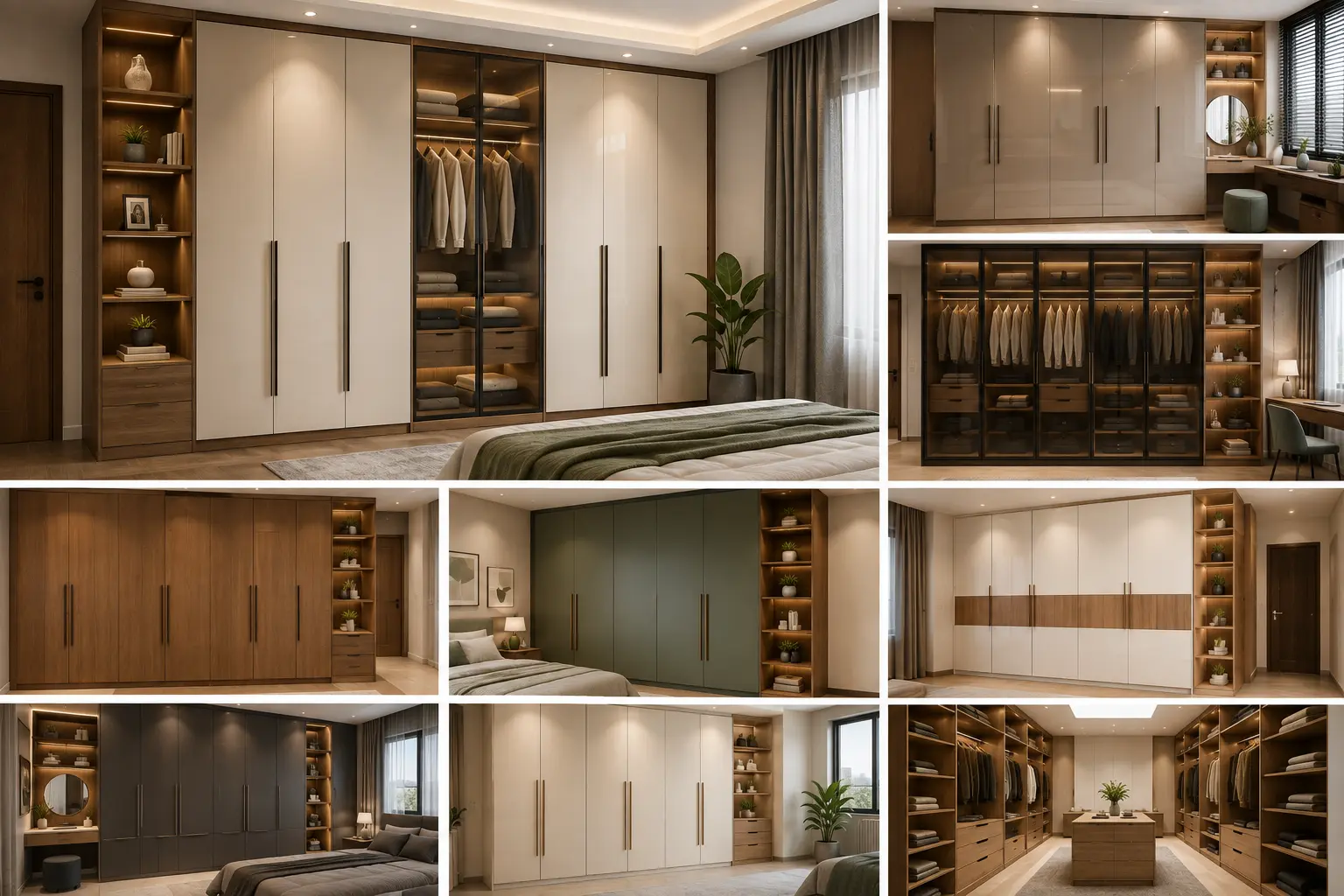
Top 10 Modular Wardrobe Manufacturers in Gurgaon (2026 Guide..
-
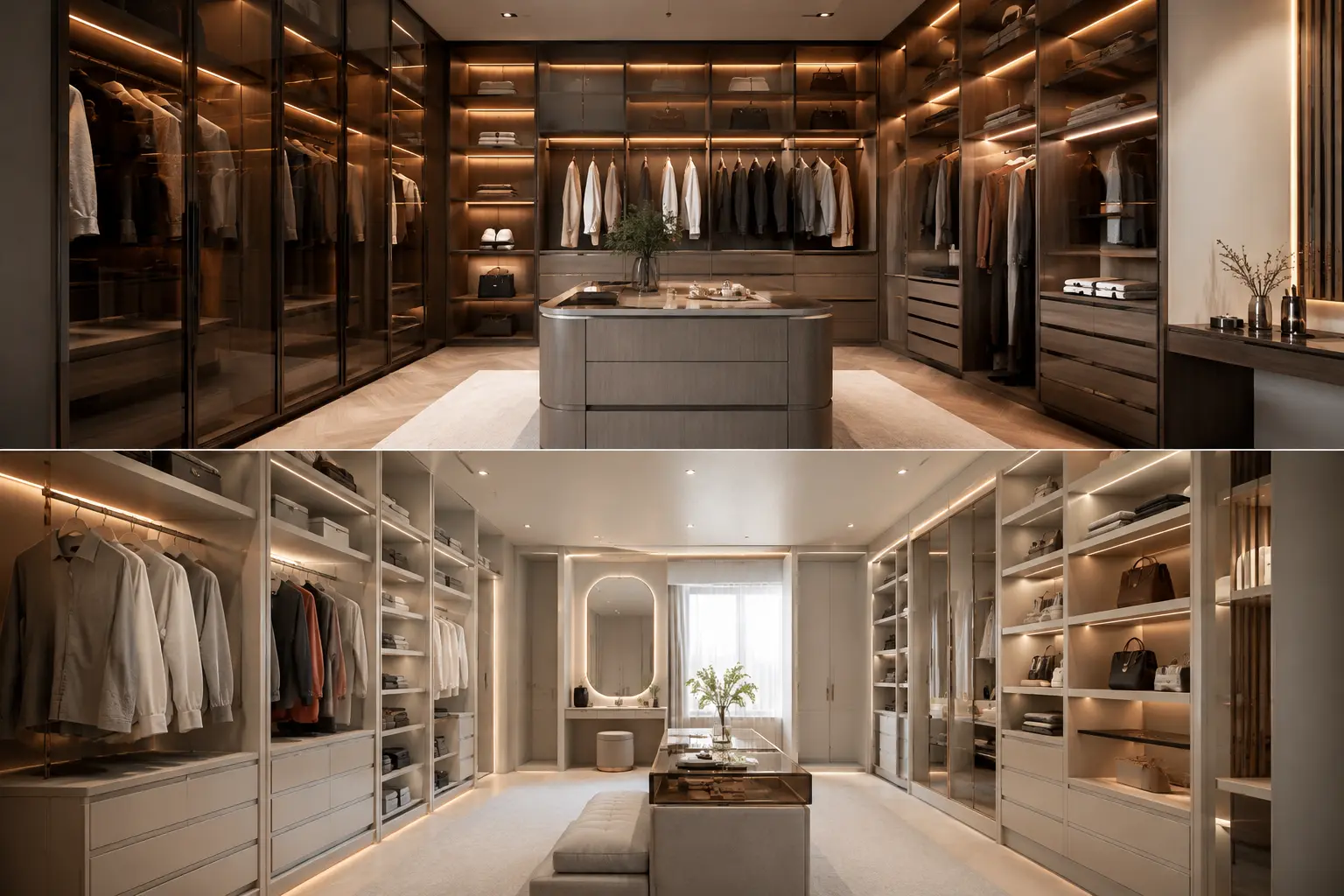
12 Modern Walk-In Wardrobe Ideas for Master Bedrooms (2026 G..
-
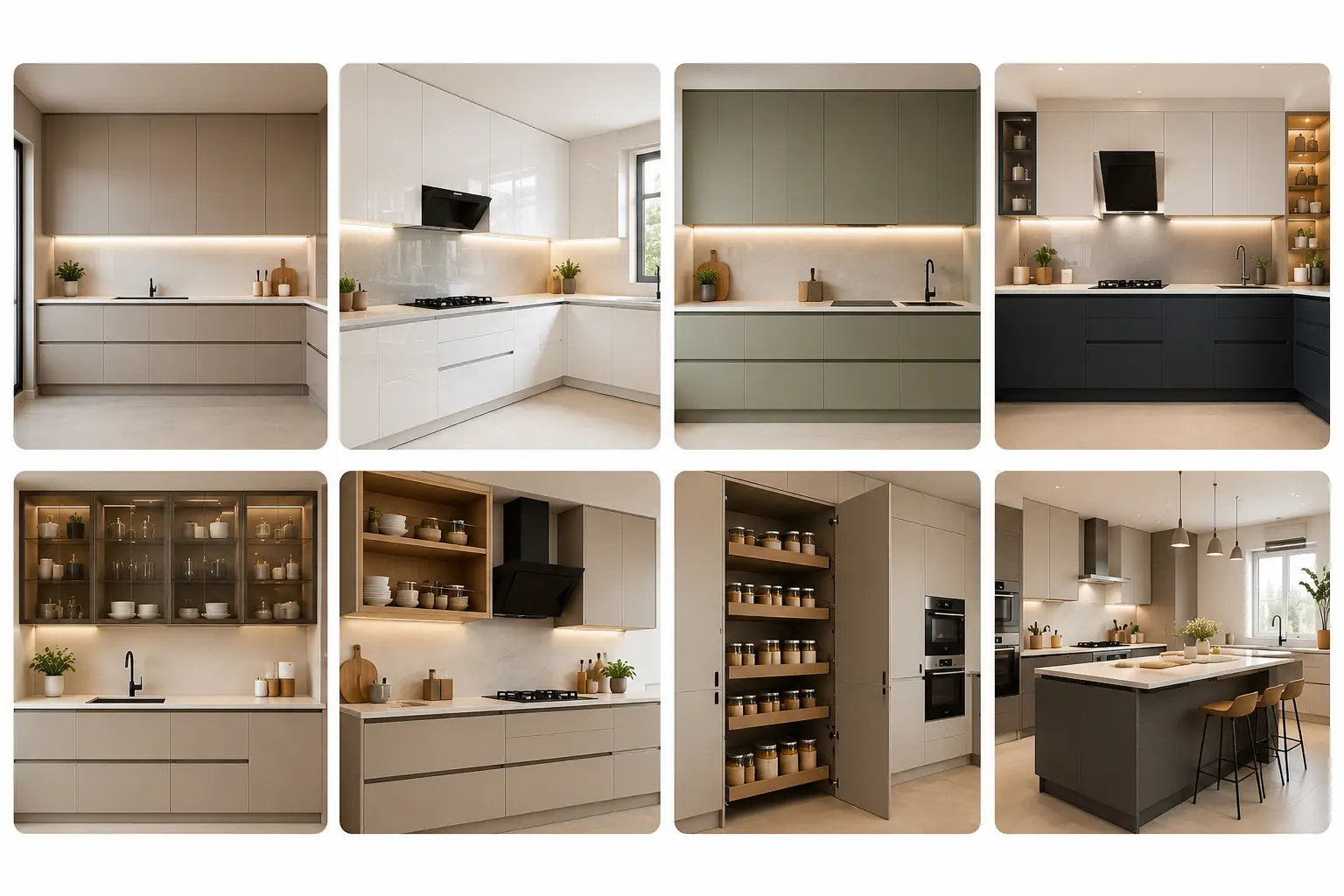
8 Contemporary Kitchen Cabinets to Elevate Your Home in 2026..
-
7 Things to Know Before Hiring a Modular Kitchen & Interior ..
-
Luxury Italian Modular Kitchens in Gurgaon: A Complete Desig..
-
Small Bedroom Wardrobe Design Guide: Maximise Space & Storag..

-
Kitchen Island Ideas for Small Kitchens in India: Designs, L..
-
L-Shaped Modular Kitchen: Complete 2026 Guide to Smart Desig..