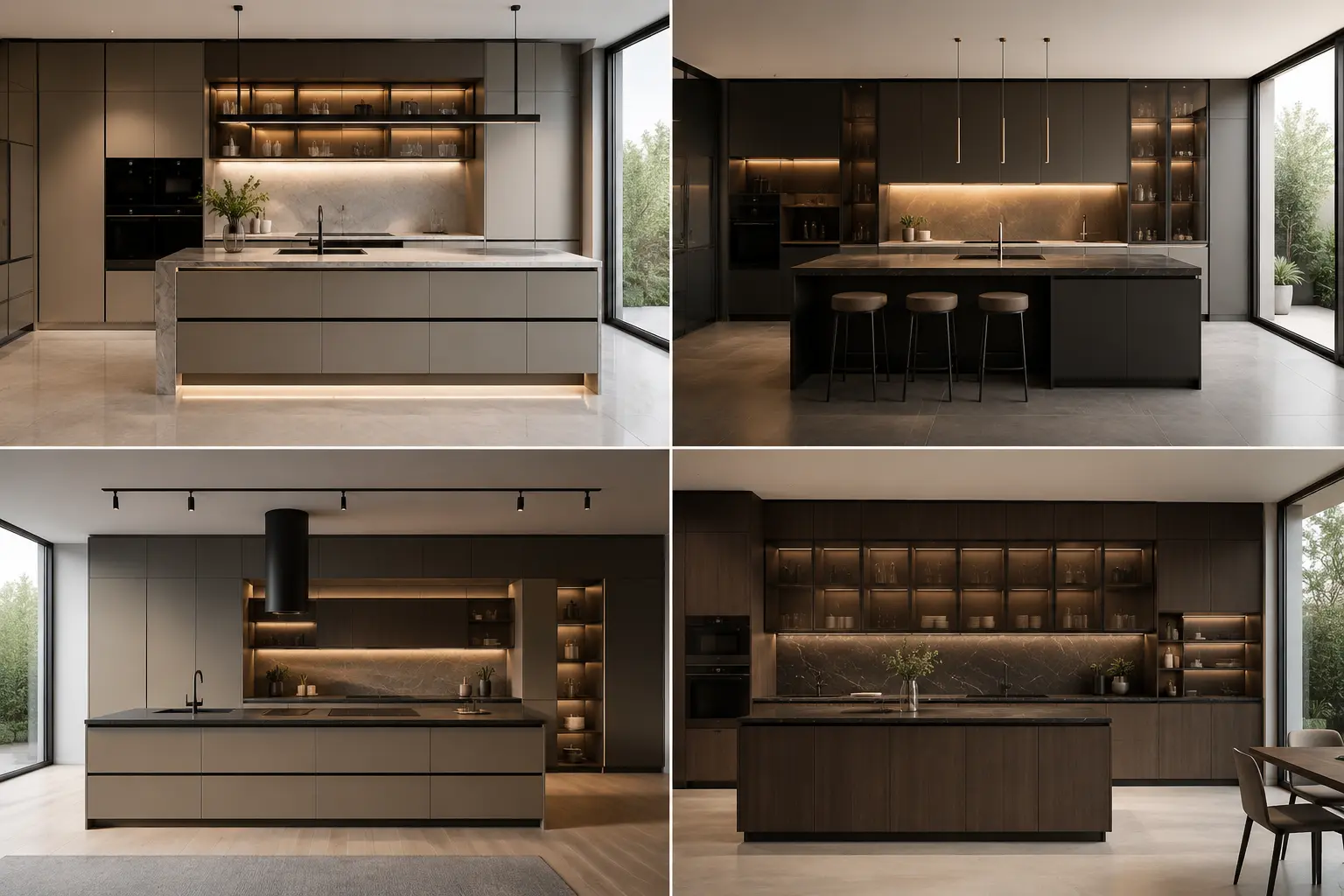
The modern floor plan leaves nowhere to hide. When structural walls come down and sightlines merge the living area directly with the cooking space, standard cabinetry fails to meet the architectural demands of the home. Installing a Luxury Italian Modular Kitchen in Gurgaon is no longer just an aesthetic decision; it is a structural necessity for open-concept layouts across the city's premium residential corridors. These systems abandon exposed hardware and bulky carcasses in favour of precision engineering, flush appliance integrations, and strict material tolerances. Whether you are retrofitting a villa on Golf Course Road or specifying interiors for a new DLF 5 apartment, the visual margin for error in an open kitchen is zero. This guide provides a technical breakdown of how these modular systems operate, the material specifications that dictate their longevity, and the critical design parameters you must establish long before manufacturing begins.
What Is an Italian Kitchen?
An Italian kitchen is a modular kitchen design built on European engineering principles — handleless cabinets, precision-fitted shutters, integrated appliances, and a finish quality that holds up under daily scrutiny. What sets it apart isn't just how it looks. It's how deliberately every element is designed to disappear. No exposed hinges, no bulky handles, no visual noise. Just clean lines, considered materials, and a layout that makes cooking feel less like a chore.
In Gurgaon's newer housing projects, the kind with open-plan living areas and kitchens that face the dining room, that restraint is exactly what homeowners are after.
Why Gurgaon Homeowners Are Choosing Italian Kitchens
Walk into any 4BHK in DLF 5, Nirvana Country, or a Golf Course Road villa, and the kitchen is no longer tucked behind a wall. It's in the room. Which means it has to look like it belongs there.
That's the shift that's happening across premium Gurgaon housing. The kitchen used to be a functional afterthought the room you'd hand over to a contractor with a list of requirements and a tight budget. Now it's the first thing a guest sees, and often the last thing a homeowner finalises when fitting out a new home.
Italian kitchen design fits this moment well. It brings the kind of visual calm that works in open-plan homes, where the kitchen, dining area, and living room share the same sightline, without sacrificing the storage and utility that Indian cooking actually demands. But finding a contemporary modular kitchen manufacturer in Gurgaon who understands both sides of that equation is harder than it sounds.
Almac does. With 15+ years in the industry, 1,500+ completed projects, and a showroom in Sector 7, Dwarka, Almac Modular Kitchens & Interiors has built Italian kitchens for homes across Delhi-NCR, working within real site constraints, real budgets, and real cooking habits.
This guide covers everything you need to know before you start: what defines an Italian kitchen, which styles work in Gurgaon homes, which materials actually matter, and how to plan the process from the first conversation to the final installation.
What Makes an Italian Kitchen Different from a Regular Modular Kitchen?
The short answer: precision. Italian kitchen design isn't about slapping high-gloss shutters on standard carcasses. It's a system, every component is designed to work with every other component, and the tolerances are tight enough that gaps, misalignments, and uneven gaps simply don't happen.
Here's what that looks like in practice:
1. Handleless Cabinetry with J-Pull or Push-to-Open Mechanisms
The most recognisable feature of an Italian kitchen is also the one that takes the most getting used to. There are no handles. Drawers and shutters open either through a J-pull profile (a recessed groove built into the top edge of the shutter) or a push-to-open mechanism where a gentle press releases the door. The result is a cabinet front with no interruption, just a flat, continuous surface from floor to ceiling.
This isn't just a style choice. In an open-plan kitchen, a wall of cabinets with handles reads as furniture. Without them, it reads as architecture.
2. High-Precision European Hardware
A kitchen is only as good as what's inside it. Italian kitchens typically specify hardware from brands like Hettich or Hafele, soft-close drawer runners, concealed hinges with 170-degree opening arcs, pull-out larder units, and integrated waste systems. These aren't upgrades; they're standard. At Almac, European-grade hardware is part of every Italian kitchen design, not an add-on you pay for later.
3. Material Palette
Italian kitchens work with a specific set of materials, each with a distinct personality:
- Lacquered MDF: the workhorse finish. Available in matte and high-gloss, thousands of colours, and a surface quality that doesn't show fingerprints (in matte) or amplifies light in a way no other finish does (in gloss).
- Acrylic: high-gloss, hyper-reflective, and extremely durable. A favourite for kitchens that lean into the drama.
- Wood veneer: real wood grain on an engineered substrate. Brings warmth without the movement and maintenance issues of solid wood.
- Glass inserts: used selectively for upper cabinets to break up a solid run of shutters and add depth.
The right choice depends on your kitchen's lighting, colour scheme, and how much maintenance you're willing to do. Your designer should walk you through the difference before you commit.
4. Integrated Appliances
In an Italian kitchen, the oven, microwave, refrigerator, and dishwasher all disappear behind cabinet panels. The chimney is concealed in the overhead unit. The hob sits flush with the countertop. Nothing protrudes, nothing stands out, every appliance is designed into the layout from the beginning, not retrofitted after the cabinets are done.
This matters more than it sounds. When appliances are integrated at the design stage, the proportions work. When they're added later, something always looks off.
5. Island or Peninsula Layouts
Most Italian kitchen designs, especially in larger Gurgaon homes with open-plan living areas, centre around a kitchen island. This isn't just a surface for prep work. It's the social anchor of the kitchen: where breakfast happens, where guests stand while you cook, where the wine goes.
Islands also solve a practical problem in open-plan homes. They define the boundary between the kitchen and the living area without putting up a wall. In DLF 5 apartments and Golf Course Road penthouses, where the kitchen and living room share the same space, an island does the work of an architectural divider without closing anything off.
6. Lighting as a Design Element
Italian kitchen design treats lighting as part of the architecture. Under-cabinet LED strips eliminate the shadow zone between the counter and eye level. Plinth lighting at floor level creates a floating effect after dark. Internal cabinet lighting makes every time you open a door feel considered.
If your kitchen plan doesn't include lighting from the design stage, it's not a complete Italian kitchen plan.
Italian Kitchen Design Styles, Which One Fits Your Home?
Italian kitchen design isn't a single look. It's a set of principles, precision, restraint, and material quality that express themselves differently depending on the home, the homeowner, and the available space.
Modern Minimalist
Monochrome palette. Flat-front cabinets in matte white, light grey, or off-white. Countertops in quartz or Calacatta marble. Integrated everything, including the fridge. This is the Italian kitchen in its purest form, the one that reads as almost nothing when you first walk in, and then reveals itself slowly as you notice how perfectly everything fits together.
It works especially well in compact Gurgaon 3BHKs where the kitchen opens onto the living area, because it doesn't compete for visual attention. It just holds the space.
Contemporary Glam
High-gloss lacquer in a statement colour, petrol blue, bottle green, graphite, burgundy, with brushed bronze or matte gold hardware. The base cabinets in colour, the upper cabinets in white or a complementary tone. A waterfall island in bookmatched marble or quartz.
This is the style that photographs well and commands a room. It's popular in Golf Course Road villas and independent floors in Sushant Lok, where homeowners want the kitchen to make a statement rather than recede.
Warm Italian / Neo-Classic
Wood veneer shutters, in walnut, teak, or smoked oak, combined with matte lacquer accents in warm tones. Natural stone countertops. Brass hardware. This style brings the warmth of traditional materials into a format that's still completely contemporary in its lines and proportions.
It's the right choice for larger homes in Nirvana Country, DLF Garden City, or South City, where the kitchen is spacious enough to carry the visual weight of darker wood tones, and where the overall interior leans residential rather than showroom-sharp.
All-White Italian
The perennial Gurgaon favourite. White matte lacquer cabinets, white quartz countertops, light grout in the backsplash. In apartments on Sohna Road or Dwarka Expressway, where natural light comes from one direction and the living area and kitchen share the same space, an all-white kitchen expands the room visually in a way that nothing else does. It also ages well. Colours go in and out of fashion. White doesn't.
How to Plan the Layout of Your Italian Kitchen
Layout planning in a Gurgaon kitchen starts with reality: how big is the actual room, where are the plumbing and electrical points, and how do you cook?
Kitchen sizes vary significantly across Gurgaon's housing stock. Compact apartments in sectors along Dwarka Expressway or Sohna Road often have kitchens in the 70–90 sq ft range — enough for a well-designed L-shaped or parallel layout, but not enough to accommodate an island without sacrificing movement. Larger independent floors and villas in DLF 5 or Palam Vihar can have kitchens of 150 sq ft or more, where a U-shaped layout with a central island becomes possible.
The layout options for an Italian kitchen typically break down like this:
-
The L-shaped kitchen is the most versatile for mid-size Gurgaon apartments. Two runs of cabinets on adjacent walls, a clear workflow triangle between the hob, sink, and refrigerator, and space in the centre for movement.
-
The parallel kitchen — two runs of cabinets facing each other, maximises storage and worktop space in long, narrow kitchens. Common in older Gurgaon construction, where the kitchen is a separate enclosed room.
-
The U-shaped kitchen wraps three walls and gives the most storage of any layout. Best suited to larger kitchens where circulation space isn't compromised.
-
The G-shaped kitchen adds a partial fourth wall, typically a peninsula, to a U-shape, creating a natural divider between kitchen and dining.
Before committing to any layout, Almac conducts a site visit. The design team measures the actual space, identifies constraints (plumbing penetrations, beam positions, window placement), and works backwards from how you use the kitchen, whether that's daily Indian cooking with multiple burners going simultaneously, or a lighter-use setup in a home where the modular kitchen is the second kitchen.
Materials That Define Luxury Italian Kitchen Designs
The gap between an Italian kitchen that holds up for 15 years and one that starts looking tired in three usually comes down to materials. Specifically, what the cabinets are made of, not just what they look like.
Cabinet Carcass: Why the Inside Matters
In Gurgaon's climate, hot summers, monsoon humidity, and air conditioning running for months, the material inside your cabinets matters as much as the finish on the outside. BWP-grade (Boiling Water Proof) plywood is the standard for carcasses that won't swell, warp, or delaminate. It costs more than commercial-grade board or HDF, and it's worth it. Ask any manufacturer for their carcass specification before you sign off on a design.
Shutter Finishes: What Each One Actually Means
- Acrylic high-gloss: Maximum reflectivity, scratch-resistant, wipes clean. The most unforgiving in terms of showing fingerprints, but also the most dramatic.
- Matte lacquered MDF: The Italian standard. A painted finish is applied in layers and oven-cured. Velvety surface, excellent colour accuracy, and easy to repair if chipped.
- PU (Polyurethane) paint: Applied by a spray gun in multiple coats. Slightly less durable than factory lacquer, but allows more flexibility in on-site touch-ups.
- Wood veneer: Real wood grain on an MDF or plywood substrate. Requires slightly more care than lacquer but brings a warmth that no painted finish can replicate.
Countertops
Italian kitchens typically use quartz or engineered stone for countertops, consistent patterning, a non-porous surface, and are resistant to the heat and moisture of Indian cooking. Marble is beautiful but requires sealing and more careful use around acidic foods like lime and tamarind. Natural quartzite is a harder alternative that gives a similar look with better durability.
For islands used as breakfast counters or casual dining surfaces, a waterfall edge, where the countertop material wraps continuously down the side of the island, is the Italian kitchen standard.
Hardware: The Part You Touch Every Day
Every time you open a drawer or a cabinet, you're interacting with the hardware. Soft-close runners from Hettich or Hafele aren't a luxury, they're a long-term investment in not having to listen to cabinets slam. The same applies to tandem box drawer systems, which carry weight evenly and extend to full extension without wobbling.
The quality of the hardware is also one of the clearest indicators of the overall quality of a kitchen. If a manufacturer is cutting costs on hardware, they're cutting costs elsewhere, too.
Why Choose Almac for Your Luxury Italian Modular Kitchen in Gurgaon?
For over 15 years, Almac has stood out as a leading modular kitchen manufacturer in Gurgaon and the Delhi-NCR region. They deliver luxury Italian kitchens, backed by a 4.5+ Google rating and 1,500+ completed projects. Their strong reputation is built entirely on client referrals.
What sets Almac apart from competitors?
-
End-to-End Process: One team handles site visits, design, manufacturing, and installation to eliminate costly delays.
-
Lasting Quality: Clients describe their woodwork finish as "smooth as butter" even 18 months after installation.
-
Real Showroom: Custom
How the Italian Kitchen Design Process Works at Almac
From the first call to the final handover, here's what the process looks like:
1. Discovery Call / Site Visit: The design team visits your home, takes precise measurements, identifies constraints (beam positions, plumbing points, window placement), and asks the questions that actually matter: how many people cook at the same time, whether you use a pressure cooker daily, and whether the kitchen faces the living room.
2. Concept & 3D Design: Before anything is produced, you see a full 3D render of your proposed kitchen. Layout, finishes, hardware, and lighting are all visualised so you can make changes before manufacturing begins.
3. Material Selection: Visit the Almac showroom to select shutters, hardware, countertops, and accessories in person. Seeing and touching materials is non-negotiable for a kitchen at this level.
4. In-House Manufacturing: Almac manufactures its kitchens in-house. This is what allows quality control at each stage, carcass production, shutter finishing, and hardware fitting, rather than outsourcing to vendors with their own standards.
5. Installation & Handover: A professional installation team handles fitting on-site, with a final walkthrough to confirm every shutter, drawer, and appliance panel works as designed. Timeline from sign-off to installation typically runs 45–60 days, depending on scope.
Ready to Design Your Italian Kitchen in Gurgaon?
A luxury Italian kitchen isn't just a design choice. It's a decision about how you want your home to feel, and how long you want it to feel that way. The materials, the engineering, the hardware spec: these are the things that separate a kitchen that looks impressive in a showroom from one that still looks right ten years after installation.
Almac has been building kitchens at that standard for over 15 years, across more than 1,500 homes in Delhi NCR. If you're planning an Italian kitchen in Gurgaon, or you're still figuring out whether it's the right fit for your space, the right next step is a conversation with someone who's actually built one.
Book a free design consultation with Almac at almac.co.in or explore the full range of modular kitchen designs to start narrowing down your direction.
Frequently Asked Questions
Q1: What is the difference between an Italian kitchen and a regular modular kitchen?
A regular modular kitchen uses standard cabinet units assembled on-site. An Italian kitchen is a precision-engineered system where every element, cabinet proportions, shutter tolerances, hardware, lighting, and appliance integration is designed together from the beginning. The result is a kitchen where nothing feels improvised. The main visible differences are handleless shutters, integrated appliances, and a finish quality that holds up over time.
Q2: How much does a luxury Italian kitchen cost in Gurgaon?
Cost depends on the scope: kitchen size, choice of finish (matte lacquer vs high-gloss acrylic vs wood veneer), countertop material, hardware specification, and whether the design includes an island or integrated appliances. An honest answer requires a site visit and a detailed brief. What Almac can guarantee is that the material and hardware specification behind every quote is clearly itemised — so you know exactly what you're paying for.
Q3: Which finish is best for an Italian kitchen, matte or gloss?
Both work well; the right choice depends on your kitchen's light levels and your tolerance for maintenance. Matte lacquer hides fingerprints, photographs beautifully, and has a texture that gloss doesn't. High-gloss acrylic reflects light and creates depth, but shows prints more readily. In Gurgaon kitchens where the cooking area faces the living room and is lit from multiple angles, matte tends to perform better over time.
Q4 Can Italian kitchen designs work in small Gurgaon apartments?
Yes, and arguably, smaller kitchens benefit more from the Italian design approach than larger ones. When space is tight, the discipline of integrated appliances, handleless shutters, and floor-to-ceiling storage makes a real difference. A well-designed L-shaped Italian kitchen in 80 sq ft will feel more spacious than a poorly planned one in 100 sq ft.
Q5: How long does it take to install an Italian modular kitchen?
From the sign-off on design and materials to installation, Almac's typical timeline is 45–60 days. The variables are scope (a straight two-wall kitchen installs faster than a U-shape with an island) and material availability. The site visit and design phase that precedes this usually takes 2–3 weeks, depending on how quickly decisions get made.
Q6: Does Almac offer a warranty on Italian kitchen installations?
Yes. Almac warranties both materials and workmanship. Specific warranty terms are confirmed at the time of project sign-off, ask for these in writing, as with any kitchen project of this scale.
Q7: Is an Italian modular kitchen suitable for Indian cooking? Yes, an Italian modular kitchen is suitable for Indian cooking when customized with moisture-resistant materials, efficient ventilation, durable countertops, and smart storage. Almac Modular Kitchens & Interiors designs Italian-inspired modular kitchens that combine elegant aesthetics with the functionality and durability required for Indian homes.
-
How to Plan Home Interiors in Delhi-NCR (2026): Modular Kitc..
-
Best Materials for Modular Kitchens in India 2026: Plywood, ..
-
Modular Kitchen Cost in Gurgaon: 2026 Price Guide and Hidden..
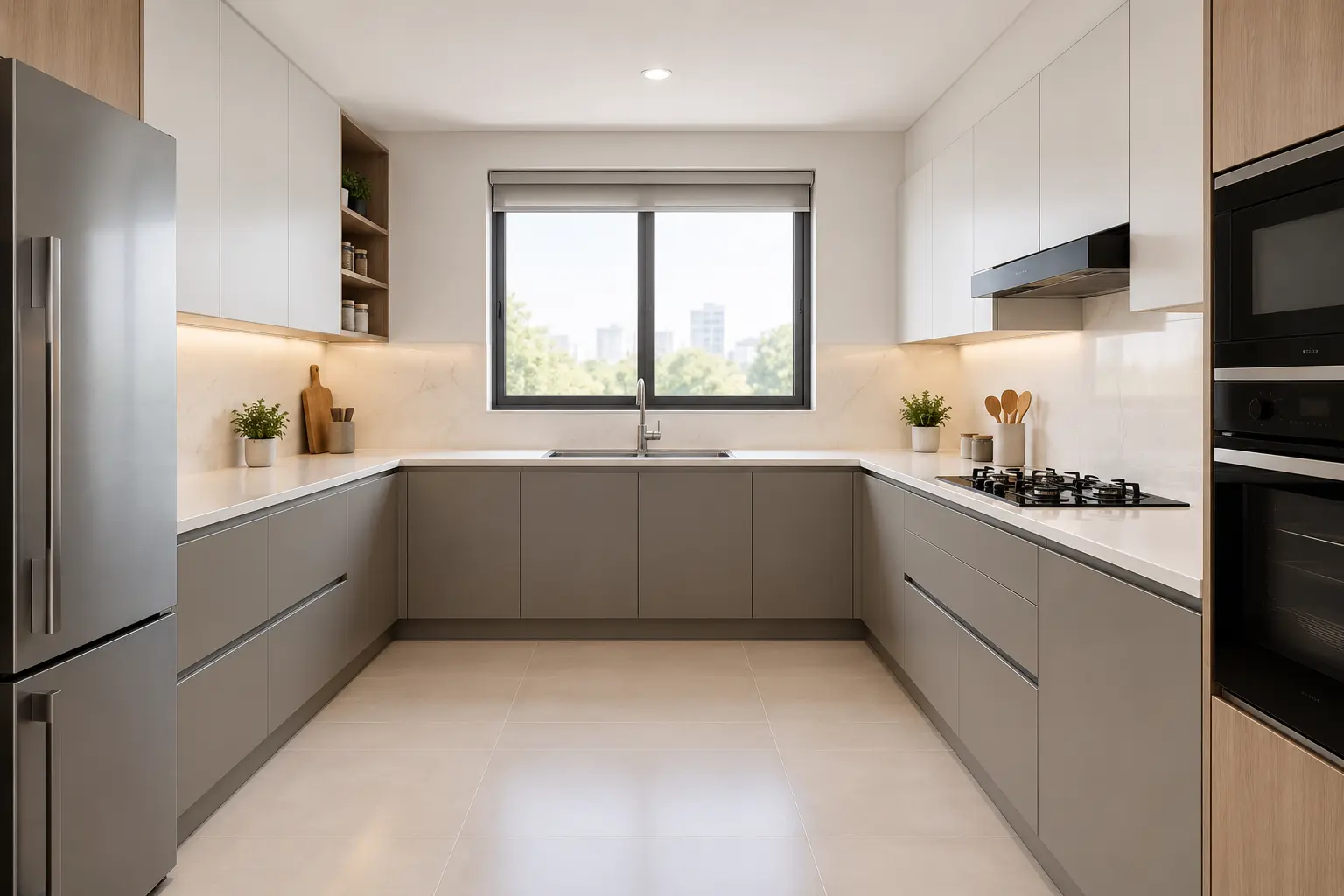
-
Top 5 Modular Kitchen Manufacturers in Delhi..
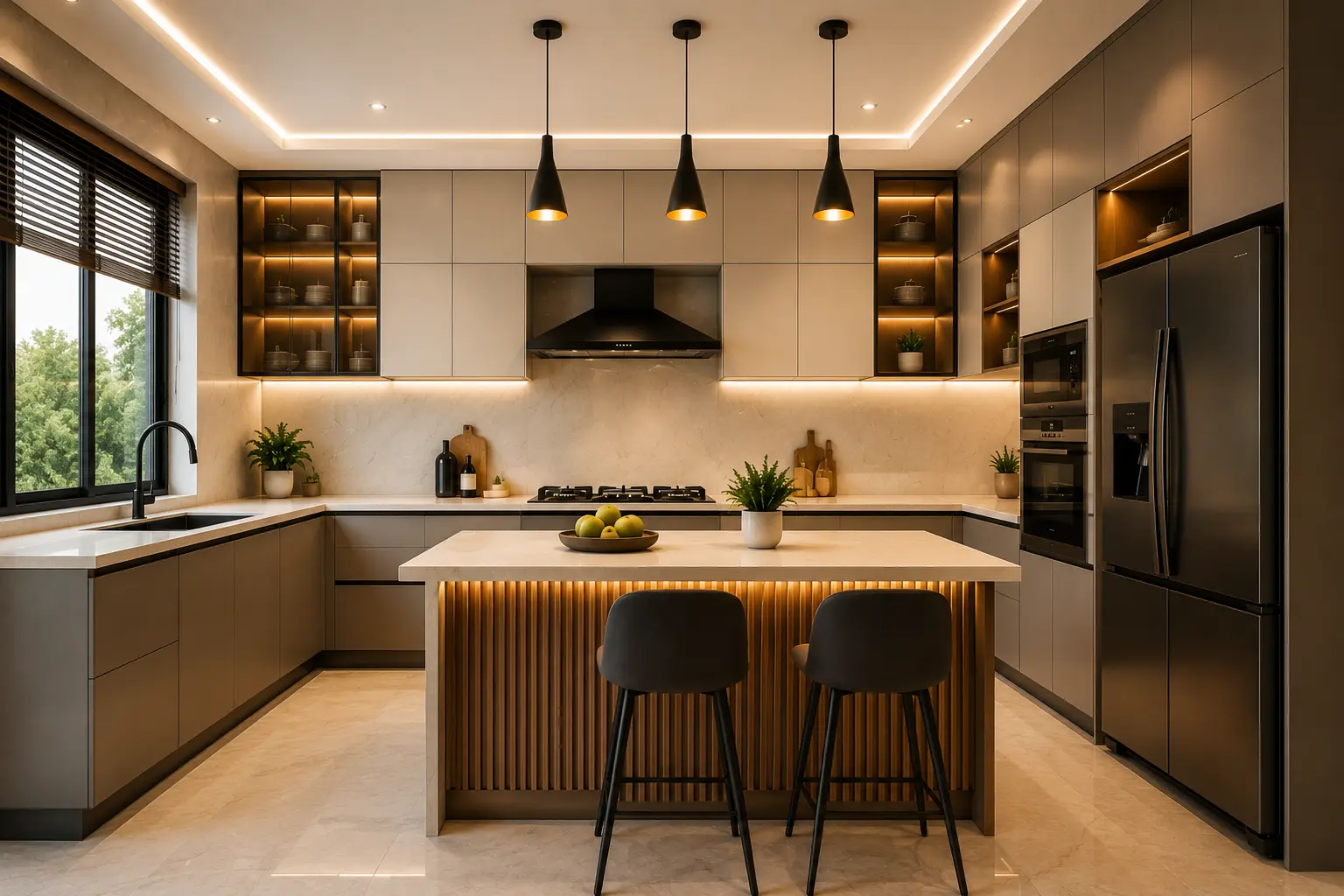
-
Top 10 Modular Wardrobe Manufacturers in Gurgaon (2026 Guide..
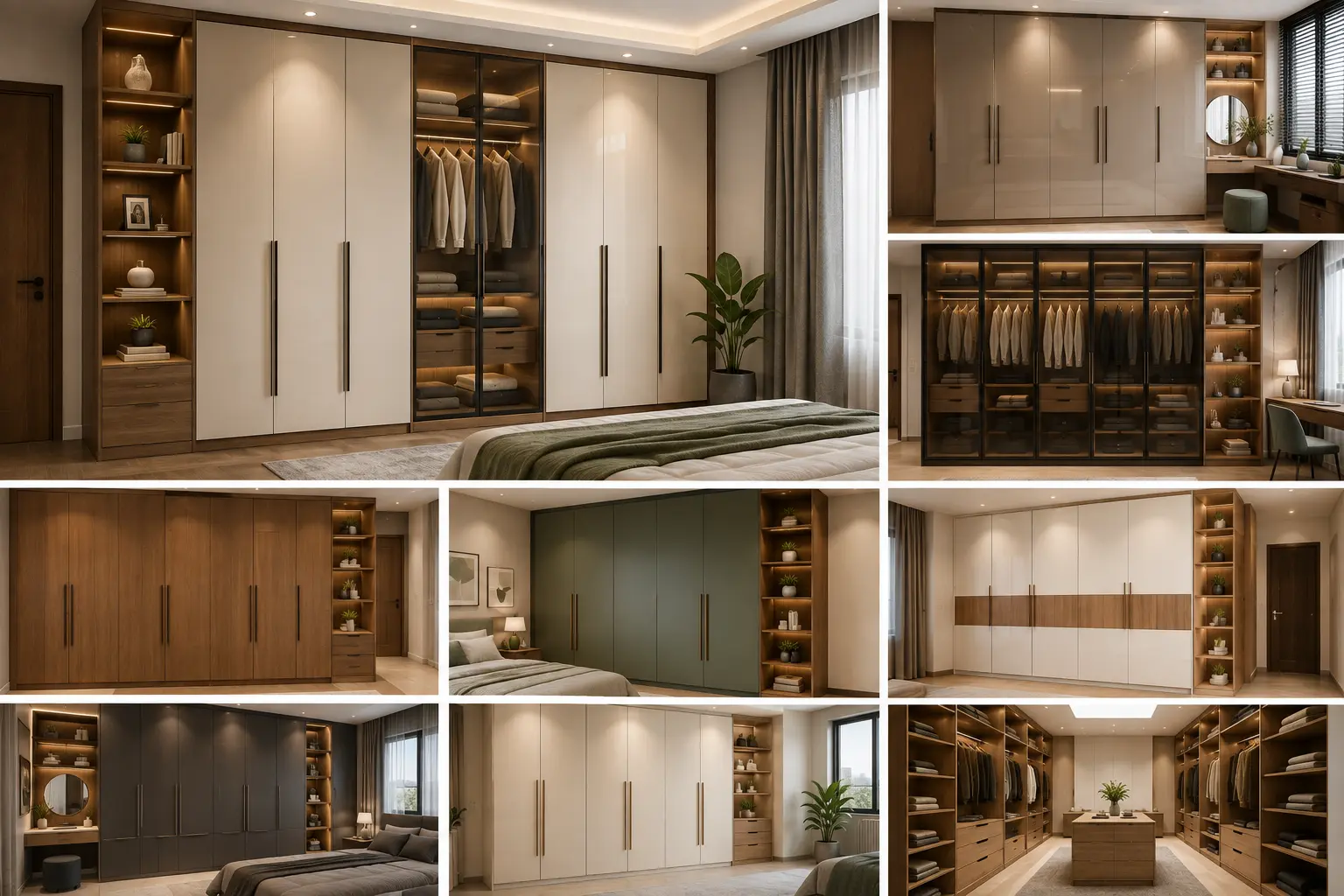
-
12 Modern Walk-In Wardrobe Ideas for Master Bedrooms (2026 G..
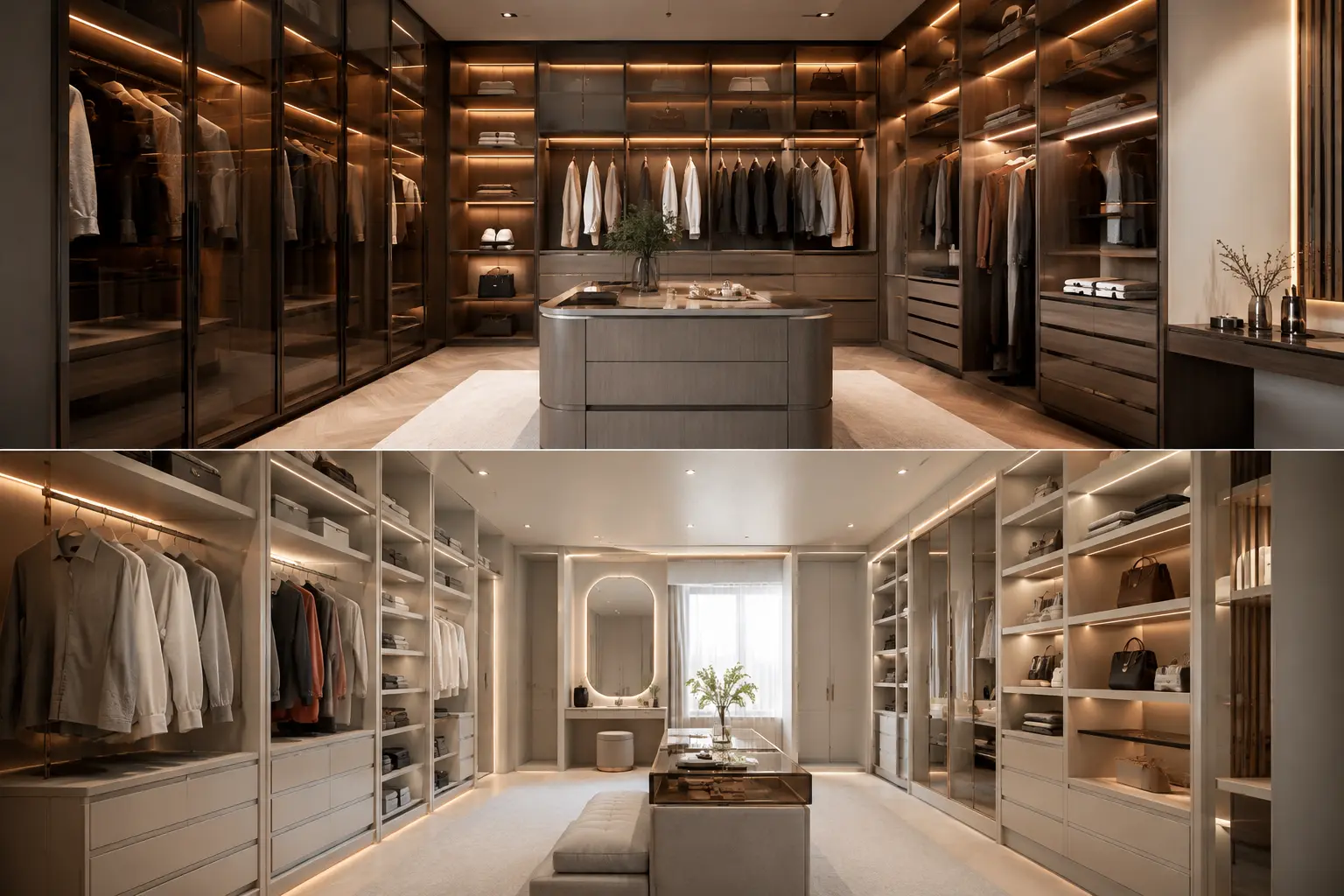
-
8 Contemporary Kitchen Cabinets to Elevate Your Home in 2026..
-
7 Things to Know Before Hiring a Modular Kitchen & Interior ..
-
Luxury Italian Modular Kitchens in Gurgaon: A Complete Desig..

-
Small Bedroom Wardrobe Design Guide: Maximise Space & Storag..