Quick Answer: What Is a Carcass in a Modular Kitchen?
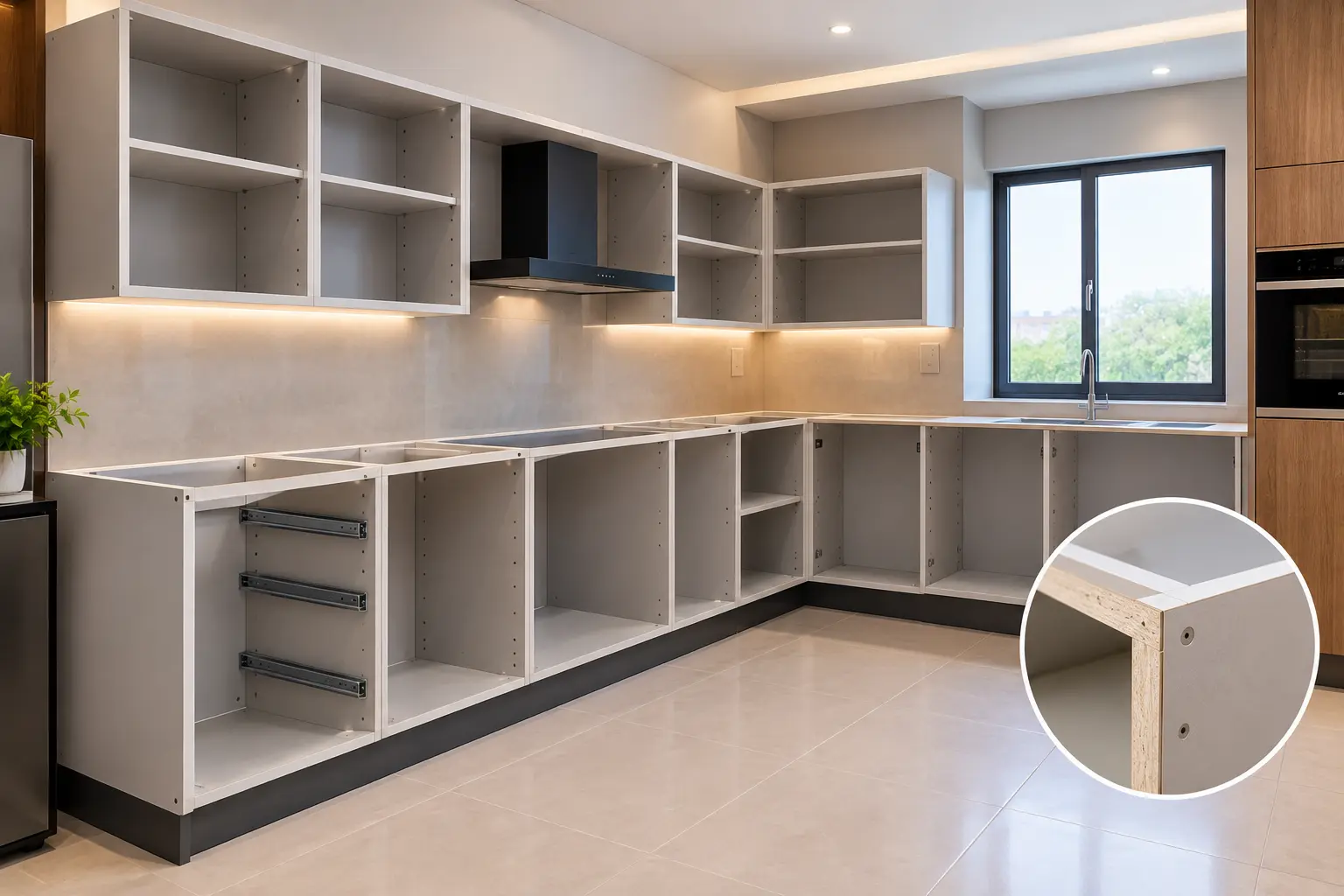
A carcass in a modular kitchen is the structural box of a cabinet, consisting of side panels, top and bottom panels, shelves, and a back panel. It supports the shutters, drawers, hardware, and stored items. Materials such as BWP plywood, BWR plywood, and HDHMR are common options, with the best choice depending on moisture exposure, budget, and cabinet location.
Key Takeaways
-
The carcass is the hidden "skeleton" of every cabinet. The shutter is only the visible "face."
-
A weak carcass causes sagging shelves, swelling near the sink, and loose hinges, even when the shutters look premium.
-
For Indian kitchens, moisture-resistant plywood or HDHMR generally performs best. Plain MDF and particle board suit only dry, low-use areas.
-
Carcass panels are commonly 18 mm thick, with a thinner back panel.
-
Always ask for the carcass material, brand, and thickness in writing in your quote.
What Does "Carcass" Mean in Furniture and Interiors?
In furniture, a carcass (also spelled "carcase") is the basic box or frame of a storage unit, before doors, drawers, or handles are added. The term comes from the idea of a "body" or "frame" that everything else is built on.
The same word is used for wardrobes, TV units, vanity units, and bookshelves. In a modular kitchen, it refers to the base units, wall units, tall units, and lofts that make up your storage.
A carcass is not the shutter, the laminate or acrylic finish, or the hardware (hinges, channels, handles). Those are separate parts that attach to it.
What Are the Parts of a Modular Kitchen Carcass?
A kitchen carcass is built from a handful of panels joined with fittings and adhesive. Each has a job:
|
Part |
Function |
Commonly used thickness |
|
Side panels |
Carry the load and hold the unit upright |
18 mm |
|
Top and bottom panels |
Keep the box rigid and square |
18 mm |
|
Shelves |
Hold utensils, appliances, and storage |
18 mm |
|
Back panel |
Stabilises the box and shields it from wall moisture |
Thinner, typically 6-9 mm |
|
Plinth (base units) |
Raises the unit off the floor, away from water |
18 mm |
Common carcass types in a modular kitchen:
-
Base units: sit on the floor and hold the countertop (they carry the heaviest load)
-
Wall units: mounted above the counter for everyday storage
-
Tall units: full-height cabinets for pantry items or appliances
-
Loft units: upper storage for rarely used items
-
Corner units: designed to make use of awkward corner space
Read More: Modular Kitchen Cost in Gurgaon (2026)
What Is the Difference Between a Carcass and a Shutter?
The carcass is the internal structure. The shutter is the door you see and touch.
|
Feature |
Carcass |
Shutter |
|
Function |
Structure and load-bearing |
Appearance and access |
|
Visibility |
Mostly hidden |
Fully visible |
|
Common materials |
Plywood, HDHMR, MDF |
Laminate, acrylic, PU, membrane, glass |
|
Effect on lifespan |
Very high |
Moderate |
|
Replaceability |
Hard and costly |
Easier to swap or refinish |
A common mistake is spending heavily on a glossy shutter finish while accepting a vaguely described carcass. You can change a shutter in a few years. Replacing a damaged carcass usually means dismantling the kitchen.
Which Material Is Best for a Modular Kitchen Carcass?
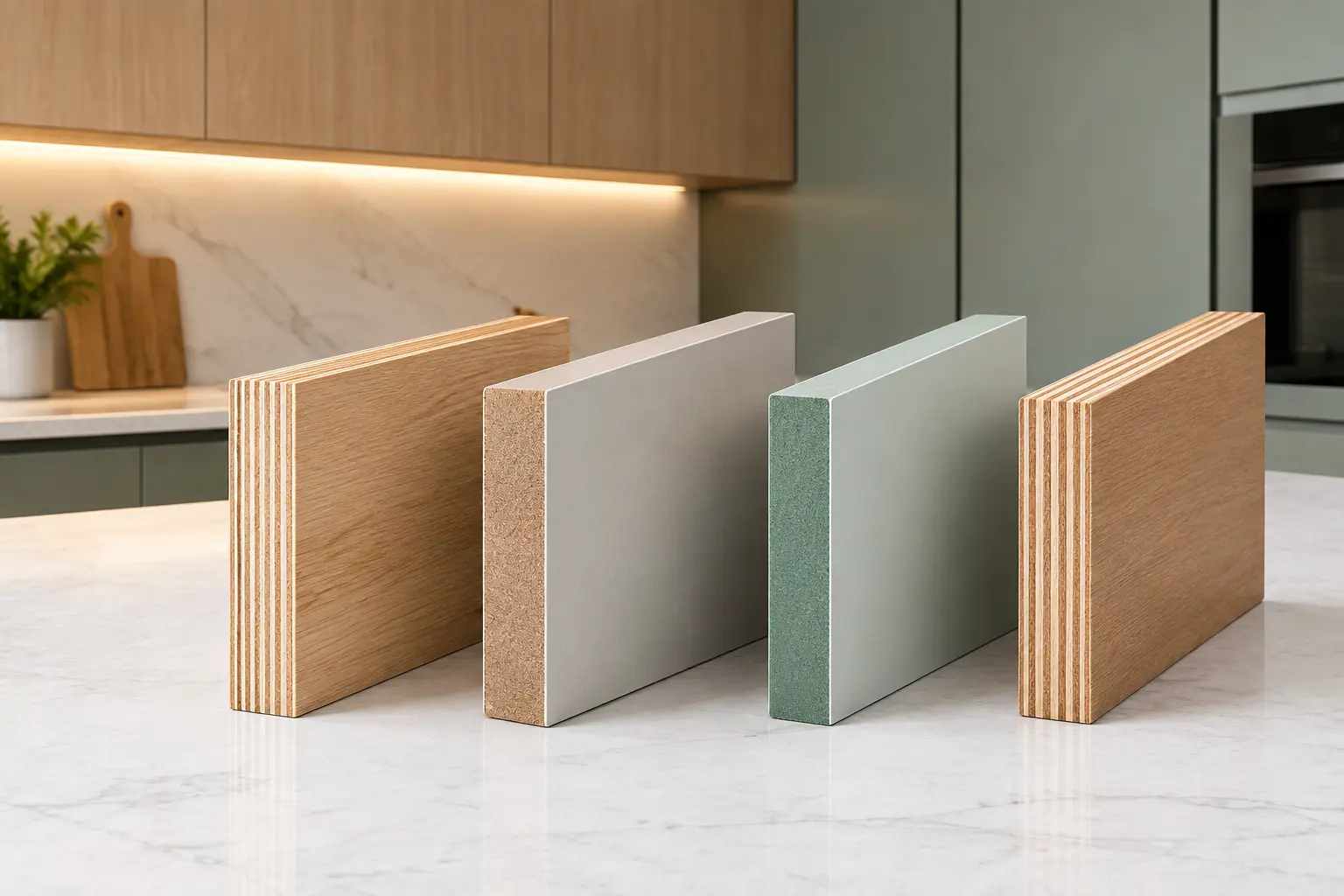
For most Indian homes, BWP (boiling water proof) plywood or HDHMR offers the best balance of moisture resistance, strength, and value. The right choice depends on your budget and where in the kitchen the unit sits.
|
Material |
Water resistance |
Termite resistance |
Durability |
Cost |
Best for |
|
BWP / marine plywood |
Very high |
High (when treated) |
Very high |
High |
Sink base, humid and coastal cities |
|
BWR plywood |
Good |
Moderate to high |
High |
Medium-high |
Most kitchen units |
|
HDHMR |
High |
High |
High |
Medium |
Overall carcass, value-focused premium builds |
|
MDF |
Low to moderate |
Moderate |
Medium |
Medium-low |
Dry zones, wall units |
|
Particle board |
Low |
Low |
Low |
Low |
Short-term or low-use spaces |
|
Stainless steel / aluminium |
Excellent |
Immune |
Very high |
Very high |
Niche, specialised builds |
BWP / Marine Plywood
Made with moisture-resistant adhesive, it handles repeated water exposure well. It is the safest choice around the sink, though it is also the costliest option.
BWR Plywood
Water-resistant rather than fully waterproof. It performs well in most kitchen areas and costs less than BWP.
HDHMR
High-density, high-moisture-resistant board is dense, stable, and holds screws well. Its smooth surface and good moisture performance have made it popular in modern modular kitchens.
MDF
Smooth and easy to finish, but it swells when water enters through unsealed edges. Use it in dry zones only.
Particle Board
The most economical option and the weakest in humidity. It is not recommended for kitchens in Indian conditions.
Stainless Steel and Aluminium
Immune to termites and moisture, but expensive and less common. They suit specialised or premium requirements.
Raed More: Best Kitchen Cabinet Materials in India (2026)
Is a Plywood Carcass Worth It?
For most households, yes. Good plywood combines strength, screw-holding power, and moisture tolerance that cheaper boards struggle to match.
BWP vs. BWR vs. commercial plywood:
-
BWP: best moisture performance, ideal for wet zones
-
BWR: a solid all-rounder for most kitchen units
-
Commercial plywood: not designed for moisture, so avoid it in kitchens
How to identify genuine plywood:
-
Look for the BIS/ISI mark and the manufacturer's brand stamp on the sheet
-
Check the edges for even, tightly bonded layers without gaps
-
Compare weight, since poor plywood often feels unusually light
-
Ask for the brand and grade in writing, and cross-check it with the manufacturer
Myth: "All plywood is waterproof." It isn't. Only specific grades are rated for moisture, and even those need sealed edges to perform well.
What Thickness Should a Kitchen Carcass Be?
Most modular kitchens use 18 mm panels for the carcass body, with a thinner back panel. This gives enough strength for heavy loads like cookware and countertops without making the unit bulky.
Two details matter as much as thickness:
-
Edge banding: Raw edges are where moisture enters. Look for properly applied, sealed edge banding on every exposed edge.
-
Back panel quality: A thin, poor back panel can warp and let wall dampness into the cabinet.
Strong hardware also depends on a strong carcass. Quality hinges, soft-close channels, and drawer systems only perform well if the panels hold screws firmly over years of use.
Why Does Climate Matter When Choosing a Carcass?
Indian kitchens face conditions that many imported design guides ignore: monsoon humidity, coastal salt air, termites, and heavy heat and oil from everyday cooking.
-
Coastal and high-humidity cities: moisture-resistant boards are essential, as ordinary MDF and particle board can swell
-
Monsoon season: panels with sealed edges resist the swelling that causes doors to misalign
-
Termites: treated plywood or HDHMR reduces the risk
-
Near the hob: heat and oil vapour can degrade low-grade boards and laminates
-
Sink area: constant splashes and leaks make this the highest-risk zone in the kitchen
Recommended material by zone:
|
Zone |
Recommendation |
|
Sink base unit |
BWP plywood (or high-grade HDHMR), with sealed edges |
|
Hob and cooking area |
BWR plywood or HDHMR |
|
Base units (general) |
BWR plywood or HDHMR |
|
Wall units |
BWR plywood, HDHMR, or MDF in dry areas |
|
Loft |
Cost-effective moisture-resistant board |
How Much Does the Carcass Affect Modular Kitchen Cost?
The carcass is one of the largest cost components in a modular kitchen, and your material choice shifts the price noticeably.
|
Material |
Upfront cost |
Typical lifespan outlook |
|
Particle board |
Lowest |
Shortest |
|
MDF |
Low-medium |
Moderate (dry zones) |
|
HDHMR |
Medium |
Long |
|
BWR plywood |
Medium-high |
Long |
|
BWP plywood |
Highest |
Longest |
A cheaper carcass can save money upfront but often costs more through repairs or early replacement. Always insist that your quote lists the carcass material, brand, and thickness.
Also Read: Best Modular Kitchen Materials in India 2026 Guide
How to Choose the Right Carcass: 7 Questions to Ask Your Designer
-
Which material is used for the carcass? (BWP, BWR, HDHMR, MDF)
-
Which brand and grade?
-
What is the panel thickness?
-
How are the edges banded and sealed?
-
Is the material termite-treated?
-
What warranty covers the carcass, and what does it exclude?
-
Can you show a manufacturer spec sheet or certification?
Red flags to watch for:
-
The quote just says "plywood" with no grade or brand
-
No material specification at all
-
Unbranded or unlabelled boards
-
Reluctance to show sample panels
Choosing the Right Kitchen Carcass With Almac Modular Kitchens & Interiors
Choosing the right carcass is an important step in planning a durable modular kitchen. Before finalising your design, compare material grades, panel thickness, edge sealing and hardware compatibility. Consider the cabinet's location, your daily cooking habits and the risk of water exposure.
Almac Modular Kitchens & Interiors helps homeowners plan modular kitchen solutions around their design preferences, storage requirements and available space. Discuss your carcass material options during your design consultation and request a written specification before approving the final quote.
If you are planning a modular kitchen in Gurgaon or a modular kitchen in Delhi, explore Almac's modular kitchen design and manufacturing services to discuss your layout, storage needs and material options.
Conclusion
A carcass in a modular kitchen is the hidden structure that supports every shelf, drawer, and shutter. Choosing the right material, thickness, and edge finish matters more for long-term performance than the shutter you see on day one.
Planning a new kitchen? Book a free design consultation with Almac Modular Kitchens & Interiors and ask for a carcass material walkthrough before you finalise your quote.
Frequently Asked Questions
1. What is a carcass in a modular kitchen?
A carcass is the structural box of a kitchen cabinet. It consists of side panels, top and bottom panels, shelves and a back panel. The shutters, drawers and hardware are fitted to or supported by this structure.
2. Which material is best for a modular kitchen carcass?
BWP plywood, BWR plywood and HDHMR are common options. The best material depends on moisture exposure, cabinet location, load requirements, budget and the manufacturer's specifications.
3. Is HDHMR better than plywood for a kitchen carcass?
Neither material is universally better. HDHMR offers a dense, uniform board, while plywood performance depends on its grade and construction. Compare the specific products' moisture performance, fixing requirements and suitability for each cabinet zone.
4. What is the difference between a carcass and a shutter?
The carcass is the cabinet's structural box, while the shutter is the door that covers the opening. The carcass provides support and storage structure, whereas the shutter contributes to the kitchen's appearance and access.
5. What thickness should a kitchen carcass be?
Panels around 18 mm thick are commonly used for the main carcass structure, but the correct thickness depends on the design, cabinet dimensions, load and material specifications. Back panels may be thinner.
6. Can a kitchen carcass be replaced without replacing the shutters?
Sometimes, but it depends on the cabinet design, dimensions and condition of the existing components. Replacing a carcass may require dismantling the cabinet and adjusting or replacing the shutters and hardware.
7. What should I check before buying a modular kitchen?
Check the carcass material and grade, panel thickness, edge treatment, hardware specifications, installation details and warranty. Request a written quotation with clear material specifications before approving the design.
-
What Is a Carcass in a Modular Kitchen? Meaning, Materials &..

-
How to Plan Home Interiors in Delhi-NCR (2026): Modular Kitc..
-
Best Materials for Modular Kitchens in India 2026: Plywood, ..
-
Modular Kitchen Cost in Gurgaon: 2026 Price Guide and Hidden..
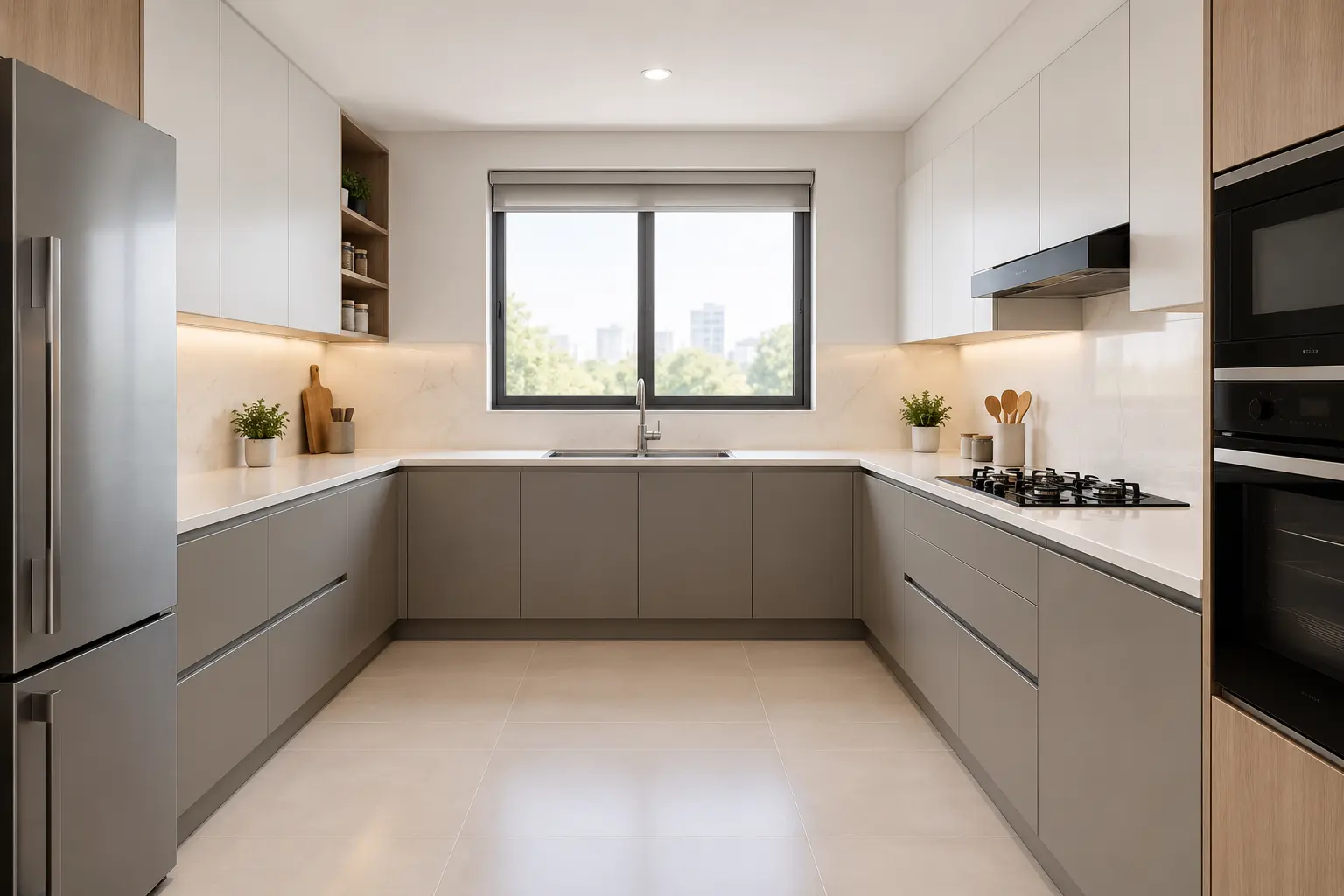
-
Top 5 Modular Kitchen Manufacturers in Delhi..
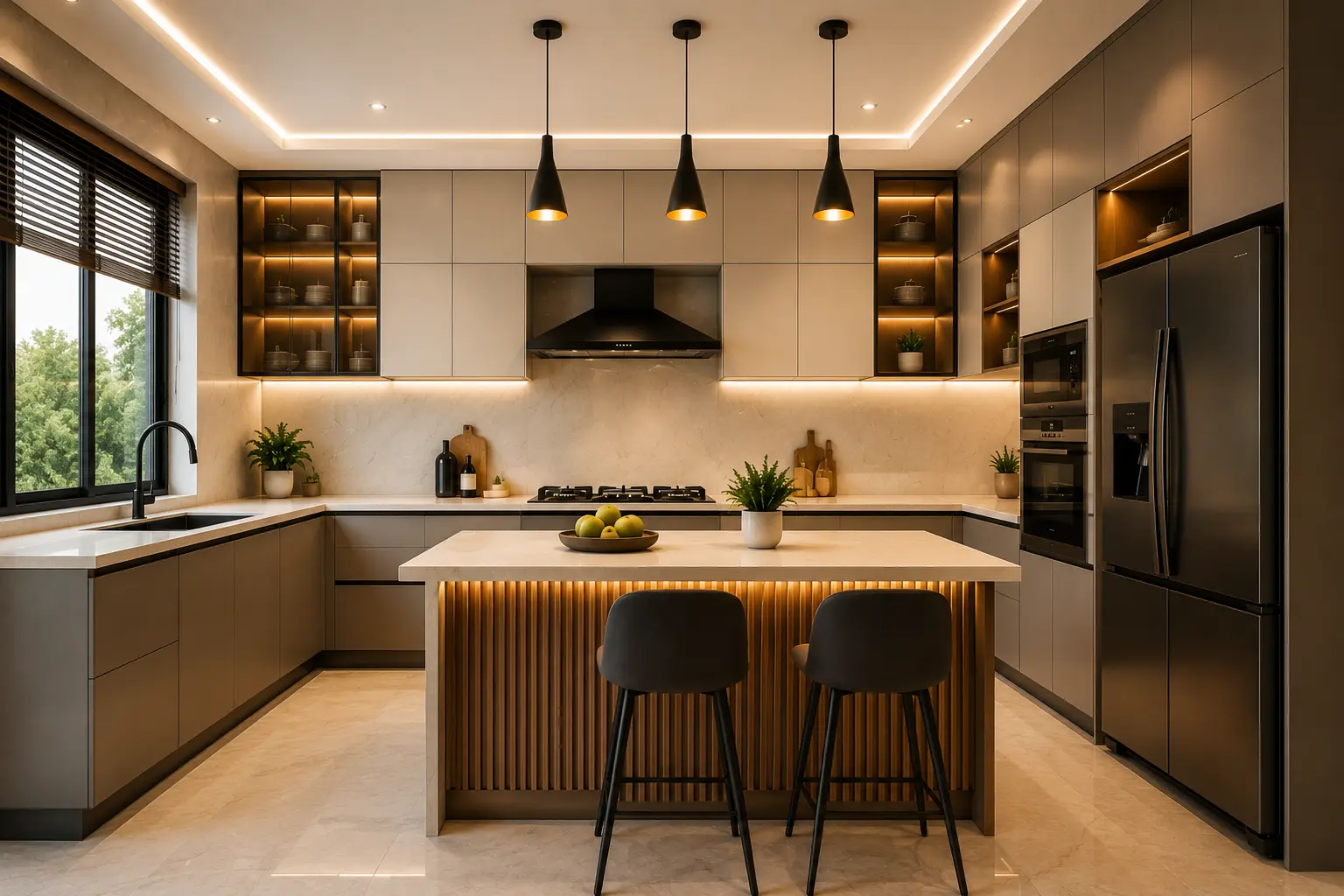
-
Top 10 Modular Wardrobe Manufacturers in Gurgaon (2026 Guide..
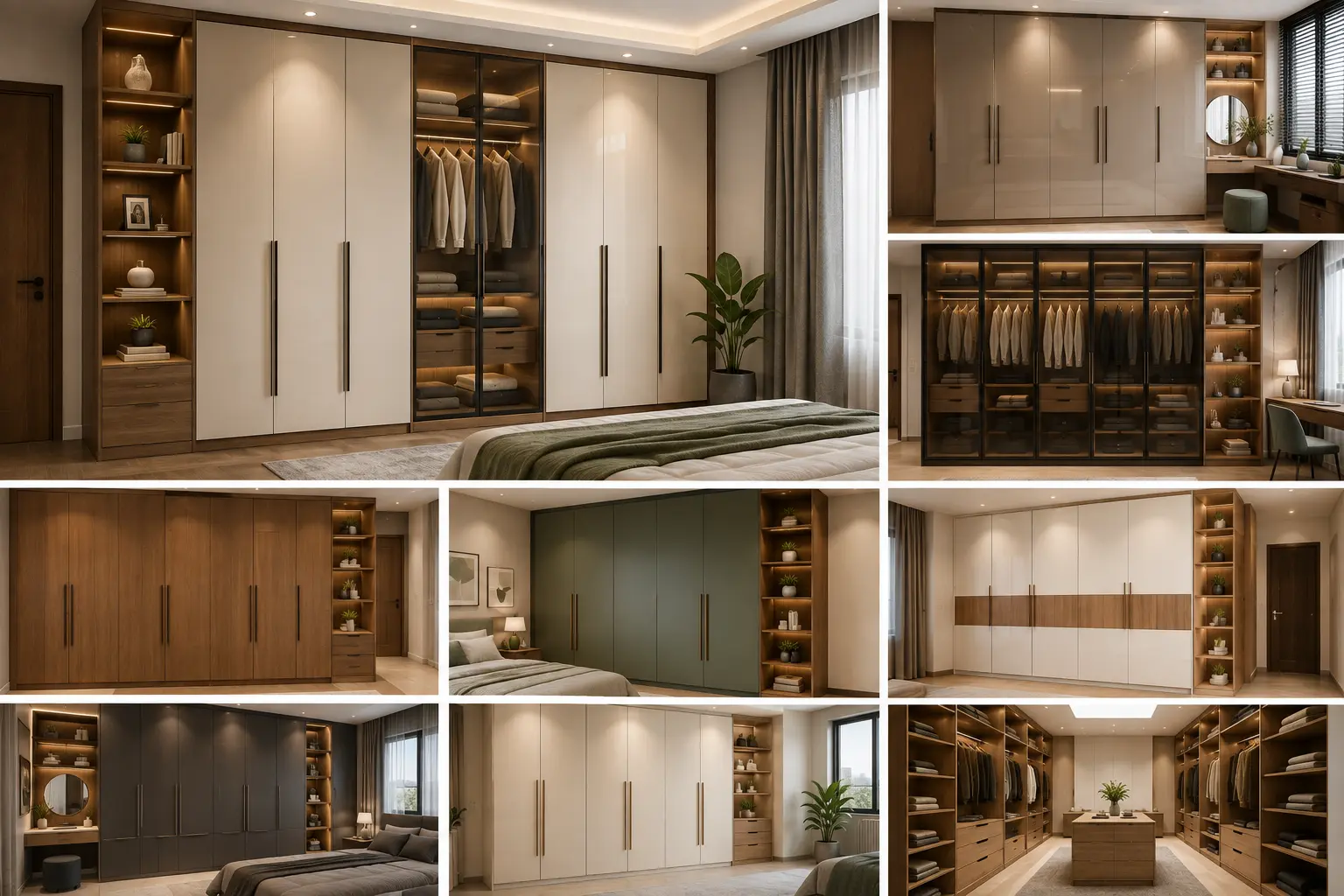
-
12 Modern Walk-In Wardrobe Ideas for Master Bedrooms (2026 G..
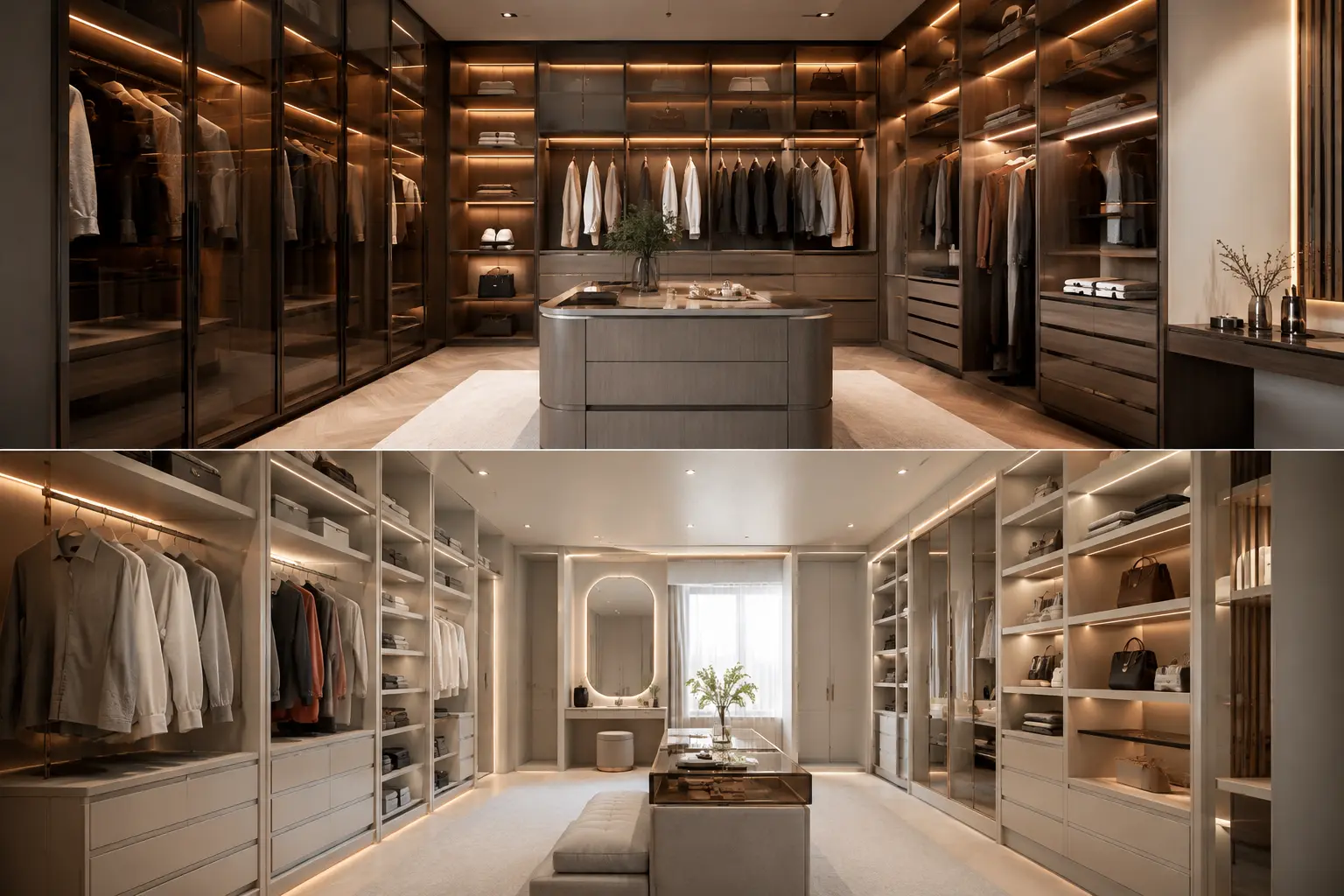
-
8 Contemporary Kitchen Cabinets to Elevate Your Home in 2026..
-
7 Things to Know Before Hiring a Modular Kitchen & Interior ..
-
Luxury Italian Modular Kitchens in Gurgaon: A Complete Desig..