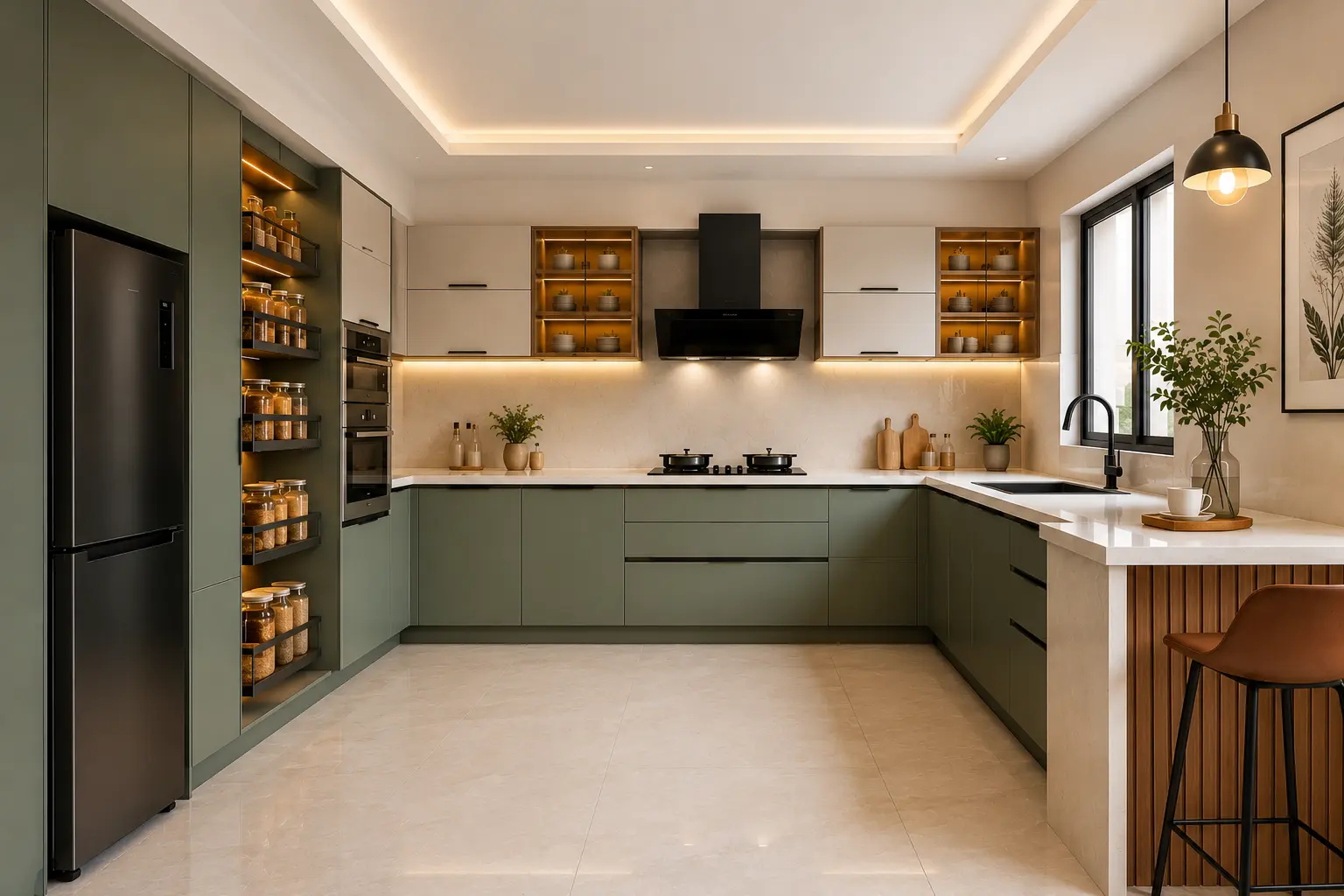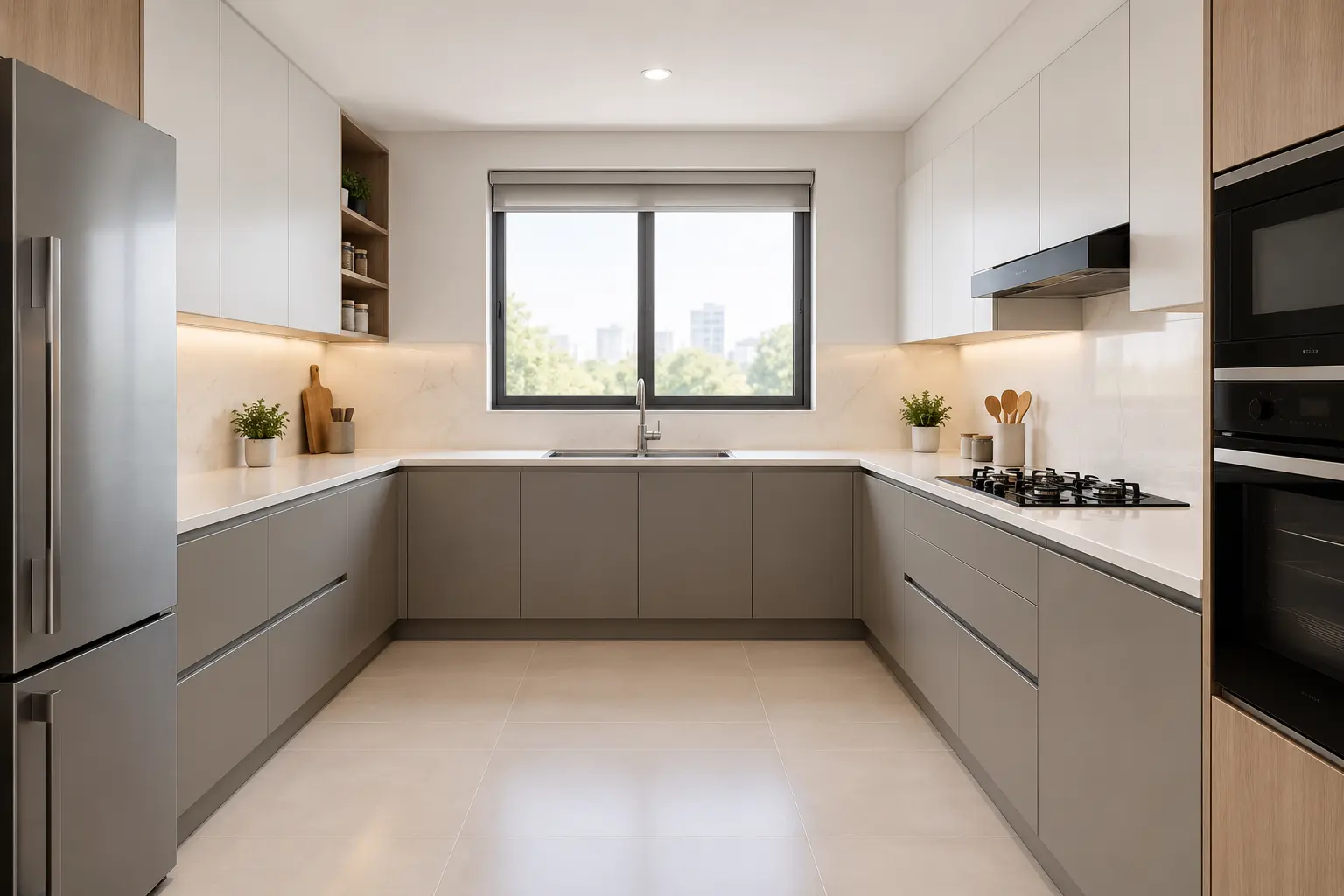
Planning a modular kitchen in Gurgaon and confused by wildly different quotes for what looks like the "same" kitchen? You're not alone. Two homeowners with identical kitchen sizes often end up paying anywhere between ₹1.5 lakh and ₹8 lakh—and the difference almost never comes down to size. It comes down to what's hidden inside the quote.
This guide breaks down exactly how modular kitchen pricing works in Gurgaon, what a fair cost per square foot looks like, and the hidden charges that catch most first-time buyers off guard.
Quick Answer: How Much Does a Modular Kitchen Cost in Gurgaon?
The cost of a modular kitchen in Gurgaon depends on kitchen size, cabinet materials, finishes, hardware, countertop, appliances, and installation. Basic, mid-range, and premium kitchens can have different budgets. Request an itemized quotation based on your kitchen measurements and confirm what is included before comparing prices.
What Does a Modular Kitchen Cost in Gurgaon?
Modular kitchens in Gurgaon typically cost between ₹1,200 and ₹4,500 per sq. ft., depending on carcass material, shutter finish, and hardware brand. For an average 10x10 ft kitchen (roughly 100 sq. ft. of shutter and carcass area), that translates to a broad range of ₹1.5 lakh (basic) to ₹6–8 lakh (premium). These figures are indicative—always ask for a detailed, itemized quote before comparing prices across vendors.
How Modular Kitchen Pricing Actually Works
Modular kitchen quotes in Gurgaon are usually built on one of two pricing models:
-
Per running foot (RFT): The most common method—you pay for the linear length of base and wall units combined, often quoted separately (e.g., ₹1,800/sq.ft base + ₹1,200/sq.ft wall units).
-
Per square foot of shutter area: Common with larger modular brands, this calculates cost based on total cabinet surface area rather than just linear footage.
The catch: a vendor advertising "kitchens starting at ₹90,000" is almost always quoting the cheapest possible carcass and shutter combination, with hardware, countertop, sink, chimney, and installation billed as extras. This is why comparing two quotes on price alone, without checking what's included, is misleading.
Also Read: Top 10 Modular Kitchen Designs in Gurgaon (2026)
The 3 Cost Components That Decide Your Final Bill
1. Carcass (Box) Material
The carcass is the internal structure of your cabinets—it doesn't show, but it decides how long your kitchen lasts.
|
Material |
Approx. Cost Impact |
Notes |
|
Particle board |
Lowest |
Prone to swelling in humid/Gurgaon summer conditions |
|
MDF (Medium Density Fibreboard) |
Moderate |
Smooth finish, moderate moisture resistance |
|
BWP Plywood (Boiling Water Proof) |
Highest |
Best moisture and termite resistance, longest lifespan |
2. Shutter Finish
This is where cost can swing 30–40% on its own:
-
Laminate—budget-friendly, decent durability
-
Acrylic—high-gloss, scratch-resistant, mid-to-premium pricing
-
PU (Polyurethane)—premium matte/glossy finish, higher cost
-
Membrane foil—mid-range, good for wrapping curved edges
3. Hardware & Fittings
Soft-close hinges, telescopic channels, pull-out baskets, and drawer systems from brands like Hettich, Blum, or Hafele cost significantly more than generic/local hardware—but they're also the single biggest factor in how smoothly your kitchen functions 5 years from now.
Read More: Modular Kitchen in Gurgaon | Luxury Kitchen Designs & Cost Guide 2026
Hidden Costs Most Gurgaon Homeowners Forget to Budget For
These are the line items that don't show up in the initial "kitchen price" but almost always appear on the final invoice:
-
Civil and electrical rework—shifting plumbing points, chimney ducting, new electrical points for appliances
-
Countertop material—granite, quartz, or quartzite is frequently quoted separately from the cabinet price
-
Built-in appliances—hob, chimney, sink, and faucet are often add-ons, not inclusions
-
Transportation and installation charges—especially relevant for high-rise Gurgaon societies with lift/loading restrictions
-
GST—confirm whether quoted prices are inclusive or exclusive of tax
-
False ceiling or wall modification—needed if you're adding a chimney or changing kitchen layout
-
Post-installation costs—AMC (Annual Maintenance Contract), warranty extensions, and minor customization requests made mid-project
A kitchen quoted at ₹2.5 lakh can easily cross ₹3.5–4 lakh once these are added—not because of overcharging, but because they were never part of the original number.
Sample Cost Breakup for a 10x10 Ft Kitchen (Indicative)
|
Component |
Approx. % of Total Budget |
|
Carcass & shutters |
45–55% |
|
Hardware & fittings |
15–20% |
|
Countertop |
10–15% |
|
Appliances (hob, chimney, sink) |
10–15% |
|
Installation, transport & civil work |
5–10% |
Note: These percentages are illustrative. Actual costs vary based on kitchen layout (L-shaped, U-shaped, parallel, island) and material choices.
Red Flags to Watch for in a Modular Kitchen Quotation
-
Vague line items like "miscellaneous" or "as per site conditions" with no defined cost
-
No mention of plywood grade, brand, or thickness
-
Unusually low per-sq-ft rates compared to the market average—check what's been left out
-
No written warranty or after-sales service terms
-
Verbal commitments not reflected in the final written quote
Read More: Best Kitchen Cabinet Materials in India (2026) | BWP Plywood vs HDHMR
How to Budget Smartly: A Practical Checklist
-
Ask for a detailed Bill of Quantities (BOQ), not just a lump-sum quote
-
Confirm carcass material, thickness, and brand in writing
-
Ask whether the countertop, sink, and appliances are included or separate
-
Clarify GST inclusion
-
Get installation and transportation charges in writing
-
Check the warranty period and what it covers
-
Compare at least 2–3 quotes using the same specifications, not just the same "budget"
-
Factor in a 10–15% buffer for civil/electrical adjustments
How Almac Keeps Your Modular Kitchen Budget Transparent
At Almac Modular Kitchens & Interiors, every project in Gurgaon and Delhi NCR begins with a detailed, itemized BOQ—so you know exactly what you're paying for before work begins. With over 15 years of experience and a single point of accountability from design to installation, Almac avoids the surprise costs that come from disconnected vendors handling design, carpentry, and civil work separately.
If you're working out how to budget for a modular kitchen and want a clear, no-surprises estimate, book a free consultation with Almac or visit the showroom to see materials and finishes in person before you commit to a budget.
Read More: Top 5 Modular Kitchen Manufacturers in Delhi | 2026
Conclusion
Budgeting for a modular kitchen in Gurgaon isn't really about finding the lowest quote—it's about finding the quote that's actually complete. The gap between what homeowners expect to pay and what they end up paying almost always comes down to the same handful of things: unclear carcass material, finish upgrades priced as "premium" without explanation, appliances and countertops billed separately, and installation or civil work left out entirely. None of these are scams—they're just commonly left unstated until the final invoice.
The fix is simple in principle: insist on a detailed BOQ, confirm material grade and hardware brand in writing, and compare vendors using identical specifications rather than identical headline prices. Homeowners who do this walk into their project with a number they can actually trust—and avoid the mid-project surprises that cause most budget overruns.
For Almac, this transparency is the differentiator worth leading with: not the lowest starting price, but the most honest one.
Frequently Asked Questions
Q1 What hidden costs are usually left out of a modular kitchen quote?
The most commonly missed costs are countertop material, built-in appliances (hob, chimney, sink), civil and electrical rework, transportation and installation charges, and GST. Always ask whether a quote is inclusive of these before comparing prices between vendors.
Q2 Is a modular kitchen cheaper than a carpenter-made kitchen?
Carpenter-made kitchens often look cheaper upfront, but modular kitchens typically work out more cost-effective over 5–10 years due to factory-grade materials, standardized hardware with warranties, and lower maintenance/repair costs. A detailed cost comparison should factor in both upfront and long-term expenses.
Q3 How much should I budget for a 10x10 ft modular kitchen?
For a standard 10x10 ft kitchen, budgets typically range from ₹1.5 lakh for a basic setup to ₹6–8 lakh for a premium kitchen with acrylic/PU finishes and branded hardware. The final cost depends on layout, material grade, and appliance inclusions.
Q4 Does the modular kitchen price include appliances like the chimney and hob?
Not usually. Most modular kitchen quotes price the cabinetry, shutters, and hardware separately from appliances like the chimney, hob, sink, and faucet. Always confirm with your vendor whether appliances are included or billed as add-ons.
Q5 How can I avoid overspending on a modular kitchen in Gurgaon?
Request a detailed Bill of Quantities (BOQ) that specifies material grade, hardware brand, and what's included versus excluded. Compare quotes from 2–3 vendors using identical specifications, confirm GST inclusion, and set aside a 10–15% buffer for civil or electrical adjustments.
Q6 Does kitchen layout affect the overall modular kitchen budget?
Yes. L-shaped and inline layouts are generally the most budget-friendly, while U-shaped, parallel, and island layouts require more carcass area, additional hardware, and longer installation time — all of which increase the total cost even at the same per-sq-ft rate.
-
Modular Kitchen Cost in Gurgaon: Budget, Hidden Charges & Pr..

-
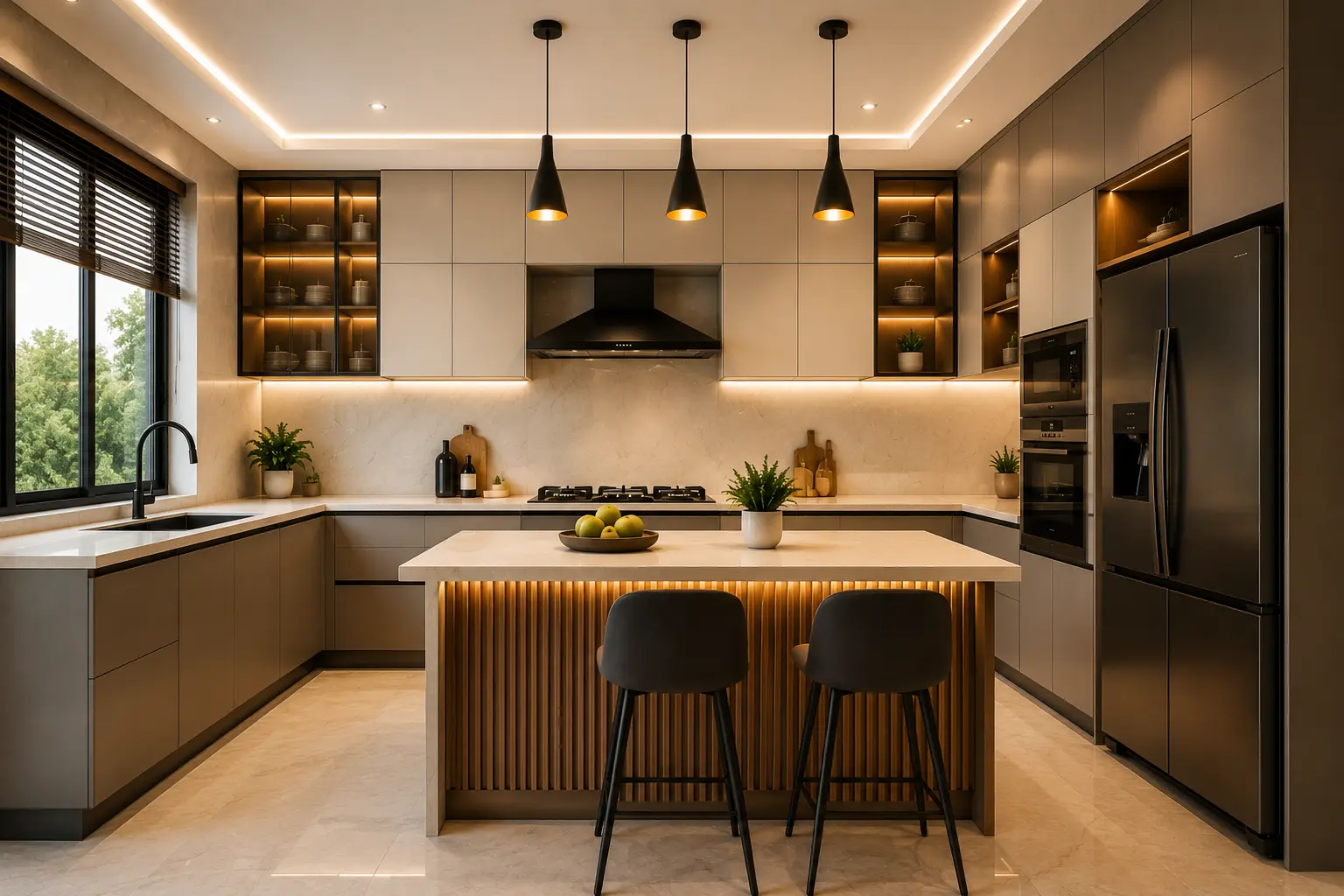
Top 5 Modular Kitchen Manufacturers in Delhi..
-
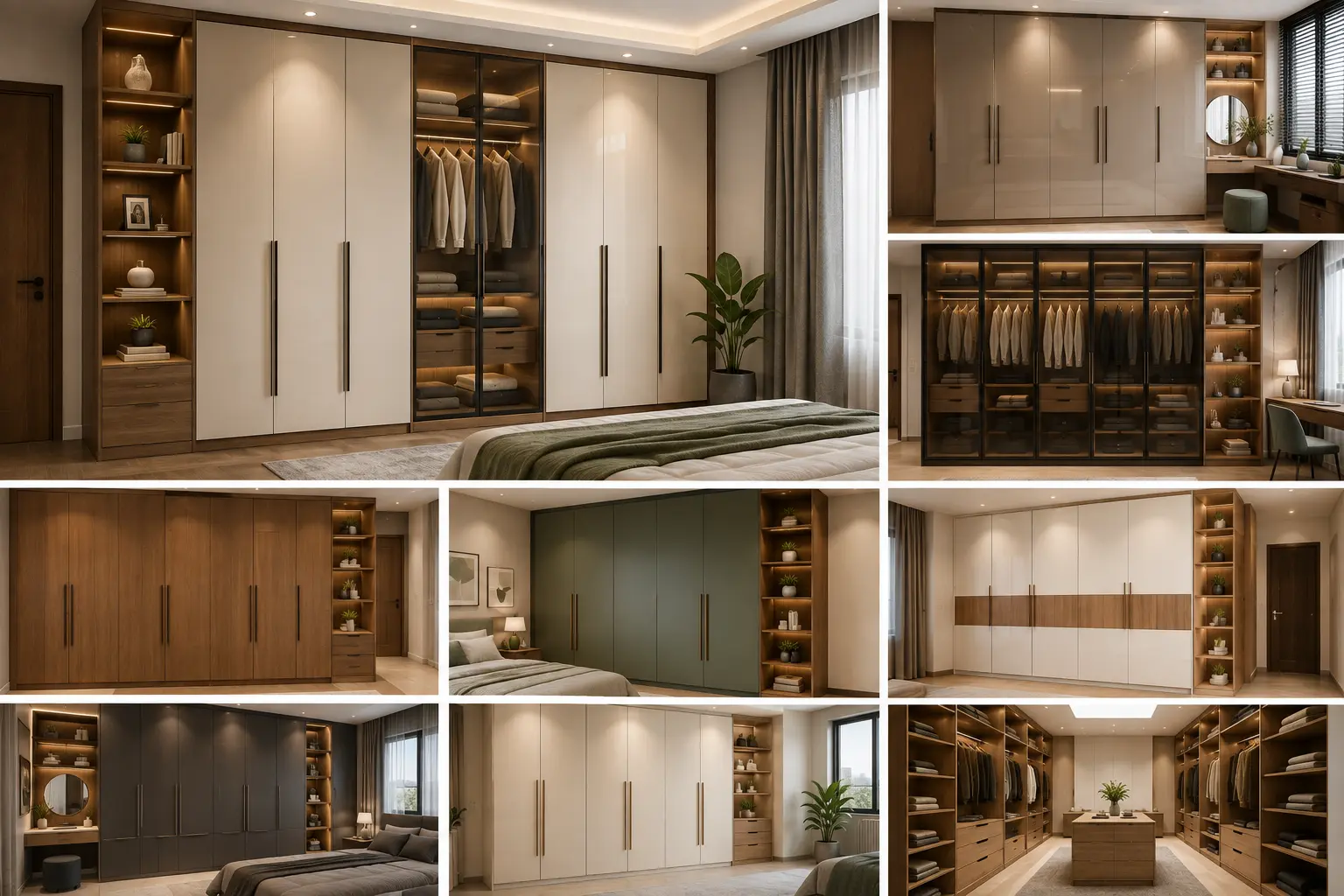
Top 10 Modular Wardrobe Manufacturers in Gurgaon (2026 Guide..
-
12 Modern Walk-In Wardrobe Ideas for Master Bedrooms (2026 G..
-
8 Contemporary Kitchen Cabinets to Elevate Your Home in 2026..
-
7 Things to Know Before Hiring a Modular Kitchen & Interior ..
-
Luxury Italian Modular Kitchens in Gurgaon: A Complete Desig..
-
Small Bedroom Wardrobe Design Guide: Maximise Space & Storag..
-
Kitchen Island Ideas for Small Kitchens in India: Designs, L..
-
L-Shaped Modular Kitchen: Complete 2026 Guide to Smart Desig..